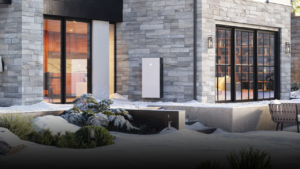
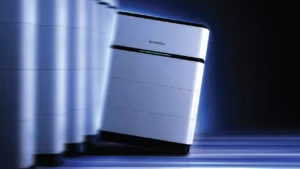
Goodwe makes two mainstream residential battery systems for the Australian market: the ESA and the Lynx F G2. Both use lithium iron phosphate (LFP) chemistry, both are modular, and both qualify for federal and WA state battery rebates.
The ESA is Goodwe’s flagship for 2026: a single-cabinet system that combines a hybrid inverter, battery storage, and energy management in one pre-wired unit. The Lynx F G2 is a DC-coupled battery that pairs with existing Goodwe hybrid inverters. If you’re buying a new Goodwe in 2026, the ESA is the starting point. If you already have a compatible Goodwe inverter and want to add storage, the Lynx is your path.
TLDR
- Goodwe's core 2026 residential range is split between the ESA (all-in-one hybrid inverter + battery in a single cabinet) and the Lynx F G2 (DC-coupled battery that pairs with existing Goodwe EH/ET hybrid inverters). Both use LFP chemistry and both qualify for WA and federal battery rebates.
- ESA is the pick for new installs. Single-phase from 5–10kW inverter with 5–48kWh storage; three-phase up to 29.9kW with 108kWh. Whole-home backup is built into the inverter head with <10ms switchover, no separate gateway, fanless operation under 30dB, and IP66 for indoor or outdoor mounting.
- Lynx F G2 is the pick for retrofits. If you already have a Goodwe EH or ET hybrid inverter, the Lynx adds 6.4–25.6kWh of storage in 3.2kWh modules without replacing hardware. Finer capacity increments than the ESA's 5/8kWh modules, but lower warranty retention (60% vs 70% at 10 years).
- Competitive position: more capacity per dollar than Sigenergy or Tesla Powerwall 3 once you're past 13.5kWh. Sigenergy wins on app polish and bidirectional DC EV charging; Tesla wins on brand and app; the ESA wins on price and a cleaner expansion path at larger capacities.
Contents
Goodwe ESA
The ESA combines inverter and battery in a single cabinet. One unit, one set of connections, one installation. Fewer components means lower install costs, fewer failure points, and less wall space than a separate inverter-plus-battery arrangement.
Single-phase
Available in 5kW, 6kW, 8kW, and 10kW inverter sizes. The 10kW model (rated 9.999kW for streamlined residential approval) runs four MPPTs for panels on up to four roof faces. Battery storage scales from 5kWh to 48kWh using 5kWh or 8kWh modules. You can mix module sizes and add capacity later without swapping existing modules.
Three-phase
CEC approved in early 2026. Inverter capacity from 5kW to 29.9kW, battery storage up to 108kWh. Stock arrived in Perth from late March 2026, timed for Western Power’s post-May 2026 framework that’s expected to relax the current 15kW three-phase limit to 30kW.
Standout features: Whole-home backup built into the inverter head. No separate gateway. Switchover under 10 milliseconds. Fanless convection cooling, under 30dB. Six-layer safety including aerosol fire suppression and AI-driven arc fault detection. IP66 for indoor or outdoor installation. For most Perth households running 6.6kW to 13kW of solar, an ESA configuration between 10kWh and 24kWh covers evening and overnight loads. Larger configurations suit EV charging or near-complete grid independence.
Goodwe Lynx F G2
The Lynx is a standalone DC-coupled battery. No inverter included. It connects to compatible Goodwe EH (single-phase) or ET (three-phase) hybrid inverters. Each module is 3.2kWh; stack two to eight for 6.4kWh to 25.6kWh per tower.
The Lynx makes sense when you already have a Goodwe hybrid inverter and want to add storage without replacing hardware. The 3.2kWh module size also gives finer capacity increments than the ESA’s 5kWh or 8kWh modules.
The trade-offs are real. Warranty retention is 60% at 10 years versus the ESA’s 70%. Backup depends on the paired inverter rather than being built in. No AFCI 3.0 or aerosol fire suppression. For new installations, the ESA is the stronger product.
ESA versus Lynx F G2 at a glance
Feature | Goodwe ESA | Lynx F G2 |
|---|---|---|
System type | All-in-one (inverter + battery) | DC-coupled battery only |
Chemistry | LFP | LFP |
Module size | 5kWh or 8kWh | 3.2kWh |
Capacity range | 5–48kWh per stack | 6.4–25.6kWh per stack |
Max parallel | 6 stacks (288kWh | 8 towers (230kWh) |
Inverter included | Yes: 3–10kW 1-ph, 5–29.9kW 3-ph | No — requires Goodwe EH/ET |
Backup | Whole-home, built-in (<10ms) | Via paired hybrid inverter |
Cooling / noise | Fanless convection, <30dB | Natural convection |
IP rating | IP66 | IP55 |
Warranty retention | 10yr / 70% | 10yr / 60% |
Best for | New installs, battery-first buyers | Adding storage to existing Goodwe inverter |
Perth installation context
Both systems are CEC approved for the SWIS network. Western Power manages the network; Synergy is your retailer. From May 2026, all new installs must comply with CSIP-AUS for remote export management. The ESA’s inverter supports these protocols. For Lynx installs paired with existing inverters, CSIP-AUS compliance depends on inverter model and firmware. Perth Solar Warehouse confirms compliance at design stage.
Synergy’s DEBS pays variable rates for exported solar by time of day. Both systems support scheduled charging and discharging through Goodwe’s SEMS app, allowing you to hold generation during low-value windows and use it during expensive peak periods. We configure these schedules during commissioning.
Rebates
From May to December 2026 in Western Australia, both the ESA and Lynx are typically eligible in principle for:
- the WA Residential Battery Scheme (state rebate), and
- the federal Cheaper Home Batteries Program (a per‑kWh incentive, subject to the live rules and remaining funding).
In practice, it comes down to the exact setup we’re installing (usable kWh, inverter/battery combo), your address/network, and getting the paperwork right on the day. PSW confirms eligibility during design and quotes it correctly so there are no surprises later.
STCs are separate again: they relate to the solar PV component (panels/inverter) under the Small-scale Renewable Energy Scheme. They don’t apply to the battery, and they’re usually applied as an upfront point‑of‑sale discount when solar is part of the install.
Competitive positioning
ESA vs Sigenergy SigenStor: Sigenergy has the better app and a unique 25kW bidirectional DC EV charger. The ESA wins on price: no separate gateway (installation-specific: more or less better), meters included, and lower battery cost per kWh. More capacity per dollar for homeowners who don’t need the premium ecosystem.
ESA vs Tesla Powerwall 3: Tesla has the strongest brand and the most polished app. But the Powerwall is a fixed 13.5kWh unit. Scaling beyond that means multiple Powerwalls of 13.5 kWh increments. The ESA is more cost-effective at higher capacities, with a reduced capacity-expansion option.
Lynx F G2 vs Sungrow SBR: Both use 3.2kWh LFP modules. The SBR has better warranty retention (70% vs 60%) and marginally better efficiency (97% round-trip). But the Lynx is the right choice if you already have a Goodwe inverter, since the SBR only works with Sungrow.
Warranty and support
ESA: 10-year product + 10-year performance (70% retention or 3.65MWh/kWh throughput). Lynx F G2: 10-year product + 10-year performance (60% retention). Both require installation out of direct sunlight. Goodwe’s Australian support operates from Rowville, Victoria.
Perth Solar Warehouse matches every Goodwe warranty with our own workmanship guarantee. One call to Bibra Lake or Neerabup. We handle manufacturer liaison.
The right battery for your home
The ESA suits most new installations. The Lynx F G2 suits existing Goodwe inverter owners. Both sit in a broader market alongside Sigenergy, Tesla, and Sungrow. Request a quote and we’ll recommend the system that fits your home, your consumption, and your budget, with all rebates and STC discounts included.