If you live in Northam, York or anywhere across the Wheatbelt, solar stacks up about as well as it does anywhere in the state. You sit in the same high-rebate zone as Perth, you’re on the same main grid, and the Wheatbelt gives you long, bright, dry days that a north-facing roof turns into real bill relief. This guide covers what you need to know before you install solar or a battery at your home: the rebates that apply, what the grid pays you for exports, how much a typical system generates, and roughly when it pays for itself.
TL;DR
- Northam and York are in STC Zone 3, the same high-rebate zone as Perth. Solar economics in the Wheatbelt are strong.
- A typical 6.6kW north-facing system in the Wheatbelt is estimated to generate 28-31 kWh a day, averaged over a year. The inland Wheatbelt is a touch sunnier than the coast, but actual output varies with roof direction, shading and season.
- Northam and York are on the South West Interconnected System (SWIS), so Synergy's DEBS export scheme applies: around 2c per kWh off-peak and about 10c per kWh in the 3pm to 9pm peak window, subject to change.
- A well-sized system commonly pays back in roughly 3 to 6 years in WA, depending on how much of your own solar you use. Rebates and rates change, so treat that as a starting point, not a quote.
Contents
One thing up front. Perth Solar Warehouse focuses on the Perth metro area at the moment, so this isn’t a sales page, and we’re not pitching you an install. We wrote it because the questions are the same wherever you are in WA, and the local details are easy to get wrong. If all you need is a solid local contact, we recommend: Off Grid Solar ›
Why solar makes sense
in WA's Wheatbelt
The Wheatbelt gets the kind of sun that suits solar. Long summer days, a high number of clear-sky hours, and a dry inland climate that leans sunny for most of the year. A north-facing roof with little shading is the ideal setup, and plenty of Northam and York homes, on larger blocks with room to orient panels well, have exactly that.
The bigger reason solar works here is the same reason it works in Perth: the rebate zone. Australia is split into four solar zones for the purpose of the federal incentive, and the zone you’re in changes how much support you get. Northam (postcode 6401) and York (6302) both sit in Zone 3, with the same rating factor as Perth. So a Wheatbelt home claims the same upfront incentive on the same size system as a home in Fremantle or Joondalup. There’s no regional penalty.
Pair that with WA electricity prices and the case gets simpler. Every kilowatt-hour your panels make and you use straight away is a kilowatt-hour you don’t buy from the grid. In a Wheatbelt summer, a decent system can cover most of a daytime household load, with enough left over to export.
Rebates and incentives
There are three separate forms of help, each working differently. It’s worth identifying, because they’re often lumped together as “the rebate” when they aren’t one thing.
The STC discount on solar panels. This is the big one for panels. Under the federal Small-scale Renewable Energy Scheme, a new system creates small-scale technology certificates (STCs) based on its size and zone. Most installers take those certificates off your hands and knock the value straight off your upfront price, so you see it as a discount rather than a payment. Northam and York’s Zone 3 rating means a 6.6kW system generates in the order of 45 certificates in 2026. STCs are tradeable certificates, not a government rebate, and their dollar value moves with the market, so the exact discount on the day depends on the certificate price. Check the current value before you commit. The scheme also steps down over time, so the benefit on the same system is larger today than it will be in a few years.
The WA Residential Battery Scheme. If you’re adding a battery, WA has a state rebate for it. For Synergy customers on the SWIS, it’s paid per usable kilowatt-hour of battery capacity up to a cap, and joining a virtual power plant (VPP) is a condition of getting it. There’s also a no-interest loan available to eligible households to spread the rest of the cost. Amounts, caps and eligibility change, and the battery and installer both have to be on the approved lists, so confirm the current rules before you count on a figure. The official detail lives at wa.gov.au.
The federal battery discount. On top of the state rebate, the federal Cheaper Home Batteries Program brings down the cost of an eligible battery, delivered through the same certificate mechanism as solar. It stacks with the WA scheme, but each has its own eligibility, so a combined headline number only holds if you actually qualify for both. The federal certificate factor stepped down on 1 May 2026, which changed the size of the discount, so any older figure you read online may be out of date.
The short rule on all three: they’re real and they’re worth chasing, but every amount here is subject to change and tied to eligibility. Get the current numbers for your own situation before you sign anything.
Exporting power
on the SWIS network
Northam and York are connected to the South West Interconnected System, the main grid that covers Perth and the South West. Western Power owns the poles and wires; Synergy is the retailer that bills you and runs the export scheme. That matters because the rules and rates you’ll read about for SWIS apply to you, whereas the separate Horizon Power network that covers the far regional areas works differently.
When your system produces more than the house uses, the surplus flows to the grid, and Synergy credits you for it under the Distributed Energy Buyback Scheme (DEBS). DEBS pays a time-of-day rate: a low rate for power exported off-peak, and a higher rate, currently around 10c per kWh, for power exported in the 3 pm to 9 pm peak. Those rates can change at any time, so check synergy.net.au for the current figures rather than relying on a figure in an article.
The takeaway is that exports are a bonus, not the main game. The off-peak buyback is modest, which is why the real value sits in using your own solar while the sun’s up, and increasingly in storing it for the evening peak. A Wheatbelt home that shifts dishwashing, laundry, bore and pool pumps into daylight hours gets far more out of a system than one that exports everything and buys it back at night.
Worth noting for new systems: the SWIS connection rules changed on 1 May 2026. Single-phase homes can now install larger systems than before, with exports managed either through a flexible export setup or a small, fixed export cap. Western Power sets the inverter and export limits for your connection. Your installer handles the technical side, but that’s why a Wheatbelt home can be sized up more generously now than it could have been a year ago.

Typical system sizes
and payback for a Wheatbelt region home
For most Wheatbelt households, a 6.6kW system on a 5kW inverter is still the sensible starting point. It’s large enough to cover a typical daytime load and bank some export credit, and it’s the size the rebate maths is built around. Homes with bigger consumption (a bore, a workshop, ducted air conditioning, a pool or an EV) often go to 10kW or beyond, which the new connection rules make easier. Larger blocks in the Wheatbelt usually have the roof or shed space to support it.
On generation, a 6.6kW north-facing system in the Wheatbelt is estimated to produce somewhere around 28 to 31 kWh a day, averaged over a year, on an unshaded roof at a normal tilt. The dry inland air helps, so the region sits at the upper end of WA’s range. Summer days run well above that, winter days below. West or east-facing panels produce less than north-facing, so the direction your roof runs changes the figure.
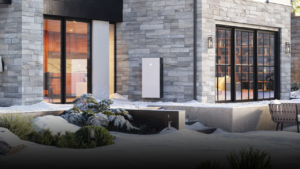
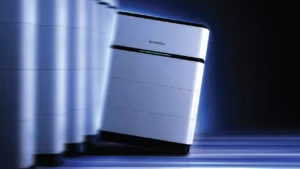
Add a battery and the economics shift from export to self-supply. Instead of selling the afternoon surplus for a few cents, you store it and use it through the evening peak when grid power is dear. A 10 to 13.5kWh battery suits most homes that want to cover the evening and have some backup capability, worth weighing in an area where storms and distance can mean the odd outage. Whether that’s worth it depends on your evening usage and how much you value backup.
As for payback: a well-sized 6.6kW system in WA commonly pays for itself in roughly 3 to 6 years. That estimate assumes current system pricing net of the STC discount, a typical Wheatbelt household tariff, and a self-consumption rate around 30 to 40 percent, meaning you use about a third of what you generate rather than exporting it all. Your own payback depends on your usage pattern, your roof, and tariff and rebate settings that change over time. Treat it as a guide and get a tailored figure before you decide.
Choosing an installer
Wherever you are in WA, the quality of the install matters more than the brand on the panel. A good system fitted badly will underperform and cause headaches; a sensible system fitted well will quietly do its job for decades. In a regional area it’s also worth asking how service and callbacks are handled, since not every metro installer travels out to the Wheatbelt. A few markers worth checking, whoever you go with:
- SAA accreditation. The installer designing and signing off your system should be accredited by Solar Accreditation Australia (SAA), the national scheme that replaced the old Clean Energy Council installer accreditation in 2024. This is the credential that lets a system claim STCs at all.
- NETCC Approved Seller. The New Energy Tech Consumer Code (NETCC) is the retailer-level code of conduct. An Approved Seller has signed up to standards covering sales, contracts and after-sales support.
- Real warranties, clearly explained. Look for separate, written cover on the panels, the inverter, the battery and the workmanship, with someone who'll actually answer the phone in five years. A single vague "warranty" line is a flag.
- A system designed for your home, not a package off a shelf. Roof direction, shading, your usage pattern and whether you want a battery should all shape what you're quoted. If nobody asks, that's telling.
About PSW: Perth Solar Warehouse and PSW Energy, established in 2013, are part of a Western Australian business that has worked in electrification since 2004. We’re a Tesla Premium Certified Installer, an NETCC Approved Seller, and our installers are SAA-accredited. The wider group holds Bureau Veritas certification for ISO 9001 quality, ISO 14001 environmental, and ISO 45001 safety standards.
Perth Solar Warehouse focuses on the Perth metro; we’re not pitching you an install in Northam or York. We built this guide because the questions are the same wherever you are in WA, and if we extend service to the Wheatbelt down the track, we’d want Northam and York homeowners to already know us.
Common questions
Are Northam and York in the same solar rebate zone as Perth?
Yes. Northam (6401) and York (6302) are in STC Zone 3, the same zone and rating factor as Perth. A Wheatbelt home claims the same upfront STC discount on the same size system as a Perth home.
Does the Synergy DEBS export scheme apply in Northam and York?
Yes. Both are on the South West Interconnected System (SWIS), which is the network DEBS covers. The far regional areas on the separate Horizon Power network work differently.
How much does a 6.6kW system generate in the Wheatbelt?
Roughly 28 to 31 kWh a day on average across a year for a north-facing, unshaded roof. More in summer, less in winter, and less again if your panels face east or west. It’s an estimate, not a guarantee.
Does Perth Solar Warehouse install in Northam or York?
Not at the moment. We currently focus on Perth metro. This page is an information guide for Wheatbelt homeowners, not a service offer.
Solar is a sound move for an unshaded home in the Wheatbelt region, where the inland sun does the rest. The two things that decide whether it’s a good system or a regrettable one are sizing it for how your household actually uses power, and getting it installed by someone accredited who stands behind the work. Get the current rebate and rate figures for your own situation before you commit, because those are the numbers that move.
If you want to understand the rebates in more depth, our WA solar rebate guide and WA battery rebate guide keep the current details. If you’re seeking a locally proven installer in your region, we recommend Off Grid WA ›