If you’re planning to install solar panels or add a battery in Perth or anywhere on Western Australia’s South West Interconnected System (SWIS), a rule change effective from 1 May 2026 will affect how your system connects and, more importantly, how it exports power back to the grid.
This change is not a “solar clampdown”; rather, it is a reset of the minimum technical requirements for export arrangements. The goal is to maintain network stability as rooftop solar use continues to grow. For homeowners, it’s helpful to understand the change in simple terms:
Starting 1 May 2026, you will still be able to install solar as usual. However, you will have to choose between two export pathways: a straightforward standard export option and a “future-ready” option that supports flexible exports and participation in virtual power plants (VPPs) once those products become available.
What changes on 1 May 2026
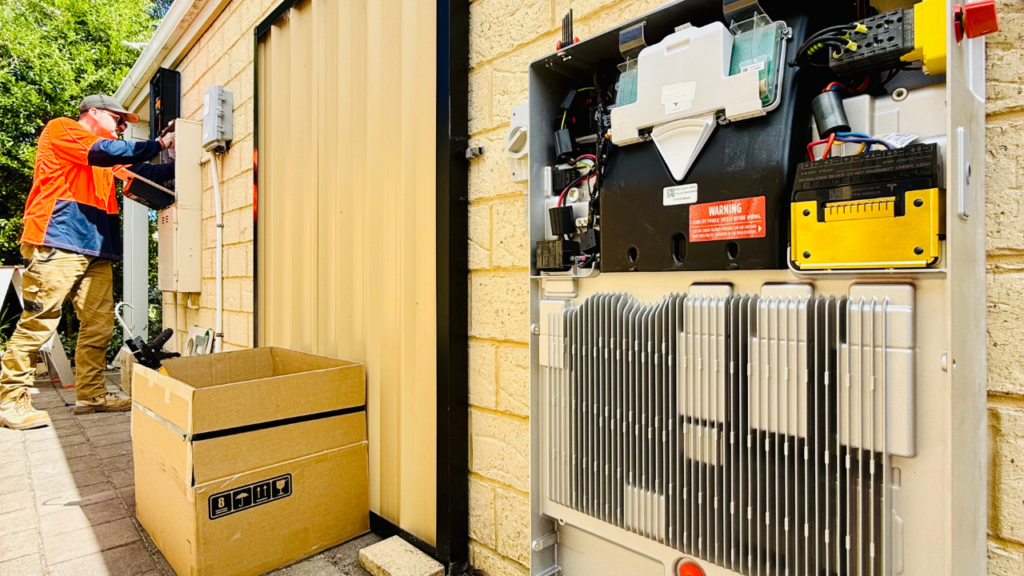
- From 1 May 2026, updated connection rules apply to new or upgraded solar and battery devices on the SWIS.
- The rules apply where total system capacity is under 30 kVA (this includes almost all residential installs; most homes are around 5 kVA).
- If your solar or battery system was installed or upgraded before 1 May 2026, these changes do not apply to you.
- Your day-to-day use at home stays the same (using solar during the day, charging a battery, running appliances).
Why the rules are changing
WA’s rooftop solar is doing precisely what households want it to do: cutting bills and reducing emissions. But as penetration rises, the grid has to manage two technical realities.
First, large volumes of export in concentrated areas can stress local poles and wires. Second, solar output can swing quickly with passing clouds, which can complicate grid stability if the system isn’t managed in a coordinated way.
The updated rules aim to keep the “solar runway” open, so more homes can install solar and batteries, while reducing network risk and preparing the system for modern export products that can vary exports rather than locking every home into a single static setting forever.
Export is now a choice, not a one-size-fits-all rule
Most homeowners don’t care about protocols or compliance acronyms. They care about three things: will solar still be worth it, will the install be delayed, and will it cost more. So here’s the choice-first framing that actually matters.
Pathway 1: Standard exports (simple, stable, no ongoing comms requirement)
If you prefer not to participate in flexible export products or VPP, or if your site can’t maintain a stable internet connection, you can stay on the standard export arrangement.
Under this option:
- Your system can export up to a standard 1.5 kW limit.
- You are not required to meet the new communications requirements.
- Your personal use of solar (and batteries) is not affected.
For many households, this will remain the “set and forget” pathway: straightforward approvals, minimal moving parts, and a familiar export structure.
Pathway 2: Future-ready exports (flexible exports / VPP capability)
If you want the option to participate in flexible exports or Virtual Power Plants (VPPs) in the future, your system must be communications-capable. In simple terms, this means that your inverter [and, if installed, your battery] should be able to establish a secure communication pathway. This capability enables it to receive remote instructions to disconnect or reconnect during rare power system emergencies and supports dynamic export settings for future products.
It’s important to note that this does not mean someone is controlling your solar system on a daily basis. Instead, it indicates that your equipment meets a consistent baseline standard, enabling you to join new programs if you choose.
What “communications-capable” means
In most modern installations, communications capability is already standard. Where homeowners notice it is in practical site details, like:
1. Internet connection at the inverter location. Many inverters sit in garages, side passages, or external walls. If Wi-Fi is weak there, it doesn’t stop you from installing solar, but it may influence whether you choose standard exports or a gateway/connection solution.
2. The system’s default behaviour if connectivity drops. If communications are lost, devices default to a lower static export limit. When communications are restored, the flexible export capability can be automatically reapplied (depending on the product you’re enrolled in). Customers are not penalised simply because an energy retailer (Synergy) can’t communicate with their system.
3. Upgrades and legacy equipment. When you upgrade an existing solar system (for example, adding a battery or changing an inverter), the new requirements can apply. Many systems can be enabled through an inverter cloud/app configuration during commissioning. Some less common setups: mixed brands, multiple inverters, or older hardware that can’t be updated, may require a gateway device to achieve the required communications standard.
Who makes sure your system complies
Electricity retailers are responsible for ensuring a site complies as part of approval, installation, and commissioning. For most Perth households, the retailer is Synergy.
Synergy is expected to update its connection requirements and installer guidance to reflect the new rules and to use the Common Smart Inverter Profile – Australia (CSIP-AUS) standard to communicate with solar and battery systems.
If you’re with a different retailer, they can adopt a different solution. The takeaway is the same: compliance is retailer-led, and your installer must design and commission the system to meet that retailer’s requirements.
What this means for your installation timeline
From a homeowner’s perspective, the most significant risk isn’t the rules themselves; it’s choosing equipment that later proves incompatible with your retailer’s requirements, causing avoidable delays at commissioning or a last-minute change of plan.
That’s why the right approach in 2026 is “choose the export pathway first, then match the equipment.”
PSW makes this simple
When you come to Perth Solar Warehouse for a quote, we’ll structure the conversation around your outcome.
We’ll confirm:
whether you’re installing or upgrading after 1 May 2026 (and what that triggers),
whether you want the standard export pathway or a future-ready pathway,
whether your site is realistically suited to communications capability (Wi-Fi reliability at the inverter location), and
whether your preferred inverter/battery model aligns with your retailer’s requirements so approval and commissioning stay smooth.
If you’re planning solar or a battery install on or after 1 May 2026, ask Perth Solar Warehouse for a “post-1 May SWIS export options check” to include with your quote. We’ll confirm the cleanest compliant pathway for your home, avoid commissioning surprises, and make sure you’re set up for the export option that fits your goals, now and later.