If your home already runs on a Fronius inverter, the Wattpilot Flex is the charger built to work with it. It charges your car from the surplus solar your Fronius system is already measuring, switches itself between one and three phases to catch every bit of that surplus, and runs through one app. This is a reference page for our Fronius customers. Fronius isn’t part of our core charger range any more, but plenty of Perth homes we’ve installed run on a Fronius inverter, and for those homes the Wattpilot Flex is the natural match. We supply and install it on request.
TLDR
- The Fronius Wattpilot Flex is the matched home charger for a house already running a Fronius inverter. It reads the surplus solar your Fronius system measures and pours it into your car.
- It automatically switches between one and three phases, so it can charge from as little as 1.38kW of surplus and ramp up to 11kW or 22kW depending on the model and your supply.
- Solar charging is the point: Eco Mode gives priority to your own solar, Next Trip Mode makes sure the car has enough range for the morning regardless.
- Tethered 6m Type 2 cable, 6–32A, Wi-Fi and LAN, RFID user profiles, IP66 for indoor or outdoor, controlled through the Solar.wattpilot app.
- PV-surplus charging needs the right metering in place (a Fronius Smart Meter or compatible Fronius setup), which is exactly why it suits a home already on Fronius.
Contents
The Wattpilot Flex earns its place when there’s a Fronius inverter already on the wall. Its whole reason for being is solar-optimised charging: instead of charging your car at full tilt from the grid the moment you plug in, it watches how much solar your home is exporting and charges the car with that surplus instead.
To do that, it needs to know how much surplus there is. That measurement comes from the metering in your system: a Fronius Smart Meter, or a compatible Fronius setup that reports your import and export. A home that’s already on a Fronius inverter usually has that piece in place or can add it cleanly, which is what makes the Flex the sensible match for our Fronius customers rather than a charger you’d bolt onto any system.
Any wallbox will charge your EV. What the Flex does on top of that is coordinate with your solar so more of your driving runs on power you generated rather than power you bought. For a Fronius household, that coordination is the whole value.
Wattpilot's "Flex"
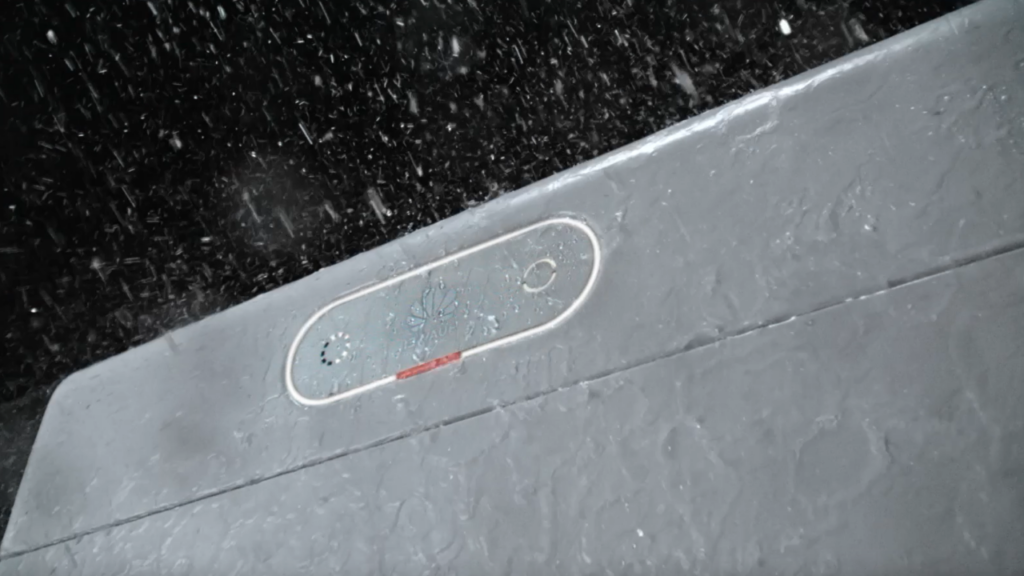
The Wattpilot Flex is Fronius’s current-generation home wallbox, the successor to the original Wattpilot. It started arriving in Australia in late 2025. The headline change over the older unit is the design and the build: a slimmer telegrey cabinet with a touch interface, rated IP66 so it’s happy indoors or outdoors. But the charging smarts are what matter for a solar home.
It comes as the Wattpilot Flex Home in an 11kW and a 22kW version, both with a tethered 6m Type 2 cable. There’s also a portable sibling, the Wattpilot Go, which plugs into a CEE socket for charging away from home; the Flex Home is the fixed, wall-mounted unit most households want.
Models side-by-side
Spec | Wattpilot Flex Home 11 | Wattpilot Flex Home 22 |
|---|---|---|
Maximum power | 11kW | 22kW |
Phase switching | Automatic 1–3 phase | Automatic 1–3 phase |
Charging range | 1.38–11kW | 1.38–22kW |
Charging current | 6–32A | 6–32A |
Cable | Tethered, 6m, Type 2 | Tethered, 6m, Type 2 |
Connection | Wall-mounted | Wall-mounted |
Network | Wi-Fi (WLAN) and LAN | Wi-Fi (WLAN) and LAN |
App control | Solar.wattpilot app | Solar.wattpilot app |
Solar charging | Yes, with compatible Fronius metering in place | Yes, with compatible Fronius metering in place |
Access control | RFID user profiles | RFID user profiles |
IP rating | IP66 (indoor and outdoor) | IP66 (indoor and outdoor) |
Dimensions | 325 x 195 x 105mm | 325 x 195 x 105mm |
Weight (incl. cable) | 4.1kg | 5.4kg |
Colour | Telegrey 4 | Telegrey 4 |
Warranty | Manufacturer term (see warranty note) | Manufacturer term (see warranty note) |
Solar optimised charging
capable
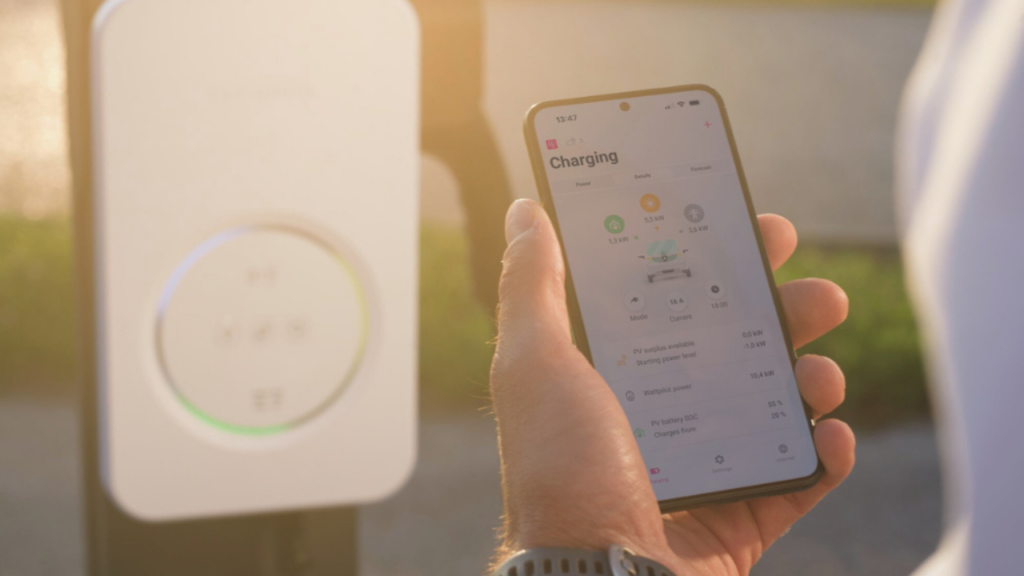
This is where a matched charger earns its keep. On a sunny Perth afternoon your panels generate more than the house is using, and that surplus normally exports to the grid at your Synergy DEBS rate. With the Flex set to Eco Mode and your Fronius metering reporting the surplus, the charger charges the car with that excess instead of sending it to the grid.
The automatic phase switching is what makes this work smoothly. Surplus solar isn’t constant. A cloud passes, the kettle goes on, and the spare power drops. The Flex can charge from as little as 1.38kW on a single phase, then, on a three-phase supply, switch up to two or three phases as more surplus becomes available, all the way to 22kW. You’re not stuck with a charger that only switches on once there’s a big block of spare solar; it works the trickle as well as the flood.
Next Trip Mode covers the other side. If you need a set amount of range by the morning, you tell the app and the charger makes sure that energy is there in time, drawing from the grid if the sun hasn’t delivered enough. So you get solar-first charging without ever waking up to a flat car.
The economics are simple. Synergy’s DEBS buyback for the energy you export is generally lower than what you’d pay to buy that same energy back later. Use it to charge the car while the sun’s up and you skip both sides of that gap. Buyback rates and scheme rules change, so check Synergy’s current DEBS rates before you bank on a specific figure, but the principle holds: solar you use yourself is worth more to you than solar you export.
Smart features
- Automatic 1–3 phase switching to match charging to available solar surplus rather than wasting it.
- Solar.wattpilot app control over Wi-Fi or LAN, so you set schedules, pick a mode and watch sessions from your phone.
- RFID user profiles so the charger can be set to run only for a registered card. Useful on a shared driveway or a strata car bay, and for keeping separate records of who charged what.
- A touch interface on the unit for control at the wallbox itself.
- IP66 weather protection so it can be mounted indoors or outdoors. One install note: mounted outdoors, the cable must enter from the bottom or rear, and charging power can be limited in direct sunlight on very hot days.
Where to purchase
your Wattpilot Flex
We don’t showcase the Wattpilot Flex the way we do our core Sigenergy, Tesla and Goodwe chargers. How you get one depends on whether Fronius is already on your wall.
If you’re an existing Fronius x PSW customer, we supply and install the Wattpilot Flex on request. It’s the matched charger for the system you already own, available through both Perth Solar Warehouse and PSW Energy, and we commission it so the solar charging works from day one.
If you’re buying a new Fronius system, the path is the Kleenheat Spark programme. Choose your products there and set Perth Solar Warehouse as your preferred installer. You get Kleenheat’s product assurance with our installation team doing the work.
Guarrantees
The Wattpilot carries a manufacturer’s warranty from Fronius, handled by their Australian team. Fronius lifted the standard term from two years to three for units installed within a defined window, and registering the unit on Fronius Solar.web can extend the cover further. Warranty terms and registration conditions change, so check Fronius’s current warranty document for the exact term that applies to your install before you commit.
Whatever the manufacturer terms, you also hold consumer guarantees under Australian Consumer Law that apply regardless, and we back our installation work with our own workmanship guarantee.
Next
If a Fronius x PSW system is already on your wall, the Wattpilot Flex completes the set. It charges the car off your own solar, switches phases to catch every bit of surplus when installed alongside a Fronius Smart Meter, and runs through one app. Reconnect with PSW, and we’ll size the right model and arrange the supply. Putting in a new Fronius system from scratch? You’ll find the Wattpilot Flex in the Kleenheat Spark programme. Select us as your preferred installer.