iStore battery explained: the 7kWh model for WA homes

If you’ve been quoted an iStore battery, or you already run one, there’s a change worth knowing about. iStore is moving its home battery from the current 5kWh module to a new 7kWh model, and the two don’t physically mix. This page explains what the iStore battery is, what the move to 7kWh entails, and where it sits compared to the batteries we fit in Perth homes.

TL;DR

iStore is an Australian brand, but the home battery itself is Huawei. iStore distributes Huawei’s residential storage here, so the iStore battery and the Huawei LUNA2000 are the same hardware sold two ways. If you were comparing an “iStore battery” against a “Huawei LUNA2000,” you were comparing the same unit.

That’s not a knock. Huawei’s LUNA2000 is a well-regarded modular battery used widely overseas. It just means the badge on the box doesn’t tell you much that the platform underneath doesn’t already.

Your system data

A fair question in 2026: who holds your system’s data, and where? This is one area where the iStore badge does change something. iStore doesn’t run on Huawei’s FusionSolar app. It uses its own monitoring platform, Univers (built on the EnOS energy operating system), which keeps your system’s monitoring separate from Huawei’s. The battery in the garage is the same hardware, but the software and the company holding your data are different. Where Univers stores that data isn’t something iStore spells out publicly, so if data residency matters to you, ask iStore to confirm the hosting location before you commit.

Two practical notes if you already own a Huawei system. If you add an iStore battery, you can usually choose to stay on FusionSolar or move across to the Univers app. And if you do switch, your historical FusionSolar data doesn’t carry over to Univers, so export anything you want to keep before the change.

The move from 5kWh

to 7kWh

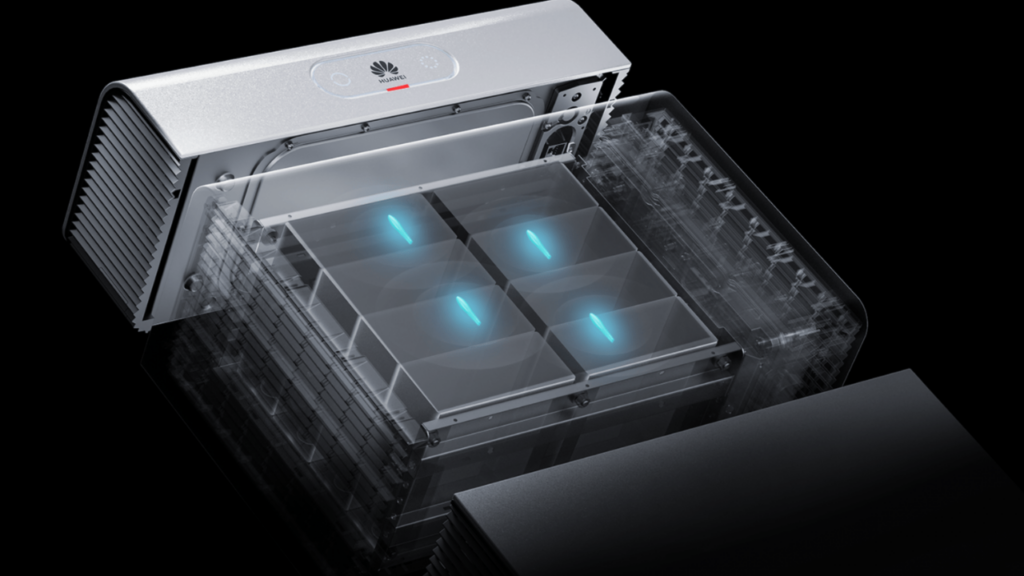
The current iStore battery uses stackable 5kWh modules. The new model uses a 7kWh module with a different physical design, and you can’t combine the two sizes in the same stack.

So if you own a 5kWh iStore (or a Huawei system using those modules) and plan to add storage later, the clock matters. Once the market shifts to the 7kWh format, sourcing matching 5kWh modules to extend your existing stack gets harder. There’s also a compliance angle: the IS-BATT-5000-ES is expected to be removed from the CEC product list around October 2026. Existing installs stay valid, but adding more of the old module becomes more constrained as that date approaches.

If expansion is anywhere on your radar, even “sometime this year,” it’s worth confirming what your current platform can still take before the changeover lands. We’ve written a full walkthrough of that decision in our iStore 5kWh to 7kWh changeover guide.
Build

The figures below come from the manufacturer platform. Treat them as the shape of the product rather than the final word, because iStore hasn’t released the badged 7kWh datasheet yet. Confirm the numbers against the official spec sheet at launch.

Feature
Detail
Chemistry
Lithium iron phosphate (LFP), chosen for thermal stability and cycle life
Module size
5kWh today; new model moves to a 7kWh module (nominal)
Design
Modular and stackable, so capacity scales in blocks
Backup
Optional backup capability for essential circuits during an outage
Warranty
10-year warranty on the current iStore unit; Huawei’s newer S1 platform extends to longer terms. Confirm the badged figure at launch

The modular approach is where it earns its keep. You add capacity in blocks rather than buying one large fixed unit, which suits a home that wants to start smaller and grow. The catch, again, is that the block you start with needs to match the block you finish with.

Where it sits

for a Perth home

We don’t carry the iStore battery as a showcased product the way we do Tesla or Sigenergy. It’s capable hardware, and if it’s the system you want, usually to match an existing iStore or Huawei system, there’s a simplified way to get it.

In WA, the iStore battery x PSW is sold through Kleenheat Spark, the solar and battery platform Kleenheat runs for Perth households, with upfront pricing and rebates shown as you build a package. Perth Solar Warehouse is an appointed installation partner for Kleenheat Spark, so you get Kleenheat’s retail backing and the option to select our install team on the same job. If the iStore battery is the one you’re after, that’s the route we’d point you to. Start an enquiry through Kleenheat Spark, and the system matches, prices, and books it from there.

A quick note on rebates: the WA residential battery rebate and the federal battery discount can both bring the cost of storage down, but eligibility and amounts change, and they depend on the battery and installer being on the approved lists. Kleenheat Spark factors the current rebates into its pricing, and it’s worth checking the rules before you commit. Our WA battery rebate guide keeps the details up to date.

Common questions

Yes. The iStore home battery is Huawei’s LUNA2000 hardware sold under the iStore brand in Australia.

No. The 7kWh model has a different physical design and can’t be stacked with the 5kWh modules. Expansion has to stay on one platform.

It depends on your current setup and how soon you need the extra capacity. If you’re expanding an existing 5kWh system, doing so before the old module phases out is usually the lower-risk option. If you’re starting fresh, the newer platform may suit you better. We’ll check both against your system.

Yes, through Kleenheat Spark. We don’t showcase on our retail pages, but Perth Solar Warehouse is an appointed installation partner for Kleenheat Spark, our recommended WA platform where the iStore battery is sold through, so you can select our team to handle the install. If you already own a legacy iStore or Huawei system supplied from PSW, we can also advise on expansion and compatibility.

If Perth Solar Warehouse installed your iStore or Huawei inverter, contact us directly about adding storage. We can confirm what your current platform takes and plan the expansion before the 5kWh module phases out. For a new system, the iStore battery is sold through Kleenheat Spark, where our team does the install, so start your enquiry there. If you’d rather compare your options first, see our current retail solutions. Either way, a short check now saves a re-buy later.

Fronius Wattpilot Flex: the EV charger to match your Fronius ecosystem

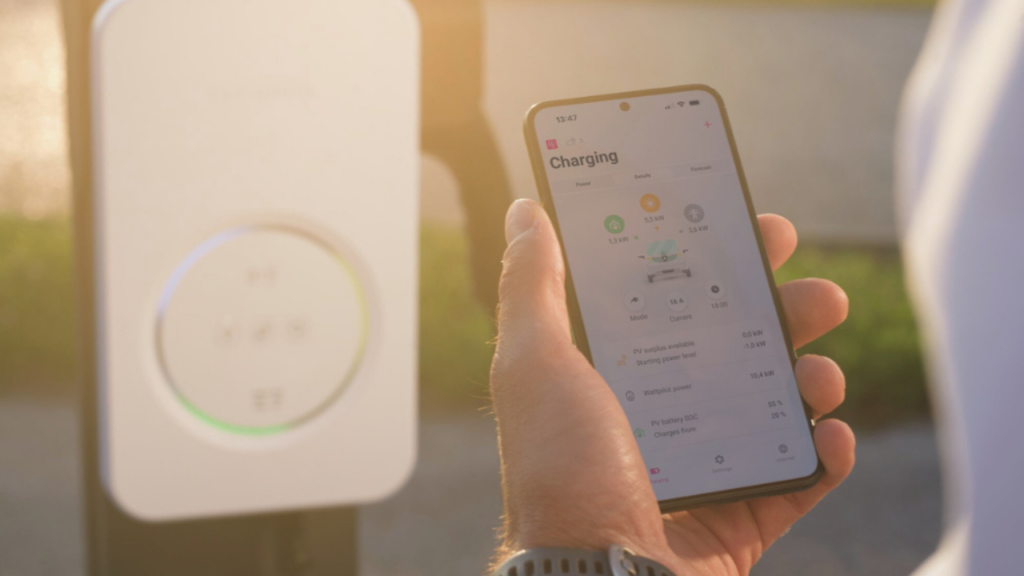
If your home already runs on a Fronius inverter, the Wattpilot Flex is the charger built to work with it. It charges your car from the surplus solar your Fronius system is already measuring, switches itself between one and three phases to catch every bit of that surplus, and runs through one app. This is a reference page for our Fronius customers. Fronius isn’t part of our core charger range any more, but plenty of Perth homes we’ve installed run on a Fronius inverter, and for those homes the Wattpilot Flex is the natural match. We supply and install it on request.

TLDR

Contents

The Wattpilot Flex earns its place when there’s a Fronius inverter already on the wall. Its whole reason for being is solar-optimised charging: instead of charging your car at full tilt from the grid the moment you plug in, it watches how much solar your home is exporting and charges the car with that surplus instead.

To do that, it needs to know how much surplus there is. That measurement comes from the metering in your system: a Fronius Smart Meter, or a compatible Fronius setup that reports your import and export. A home that’s already on a Fronius inverter usually has that piece in place or can add it cleanly, which is what makes the Flex the sensible match for our Fronius customers rather than a charger you’d bolt onto any system.

Any wallbox will charge your EV. What the Flex does on top of that is coordinate with your solar so more of your driving runs on power you generated rather than power you bought. For a Fronius household, that coordination is the whole value.

Wattpilot's "Flex"

The Wattpilot Flex is Fronius’s current-generation home wallbox, the successor to the original Wattpilot. It started arriving in Australia in late 2025. The headline change over the older unit is the design and the build: a slimmer telegrey cabinet with a touch interface, rated IP66 so it’s happy indoors or outdoors. But the charging smarts are what matter for a solar home.

It comes as the Wattpilot Flex Home in an 11kW and a 22kW version, both with a tethered 6m Type 2 cable. There’s also a portable sibling, the Wattpilot Go, which plugs into a CEE socket for charging away from home; the Flex Home is the fixed, wall-mounted unit most households want.

Models side-by-side

Spec
Wattpilot Flex Home 11
Wattpilot Flex Home 22
Maximum power
11kW
22kW
Phase switching
Automatic 1–3 phase
Automatic 1–3 phase
Charging range
1.38–11kW
1.38–22kW
Charging current
6–32A
6–32A
Cable
Tethered, 6m, Type 2
Connection
Wall-mounted
Wall-mounted
Network
Wi-Fi (WLAN) and LAN
App control
Solar.wattpilot app
Solar.wattpilot app
Solar charging
Yes, with compatible Fronius metering in place
Access control
RFID user profiles
RFID user profiles
IP rating
IP66 (indoor and outdoor)
Dimensions
325 x 195 x 105mm
325 x 195 x 105mm
Weight (incl. cable)
4.1kg
5.4kg
Colour
Telegrey 4
Telegrey 4
Warranty
Manufacturer term (see warranty note)
The number that decides which model and what speed you get is set at your switchboard, not on the charger. Most Perth homes are single-phase, and on a single-phase supply the Flex charges up to about 7.4kW, plenty for overnight charging. If your home is on a three-phase supply, the unit can use all three phases for up to 11kW or 22kW, and its automatic phase switching means it steps between one and three phases as your solar surplus rises and falls. That’s the feature worth understanding next.

Solar optimised charging

capable

This is where a matched charger earns its keep. On a sunny Perth afternoon your panels generate more than the house is using, and that surplus normally exports to the grid at your Synergy DEBS rate. With the Flex set to Eco Mode and your Fronius metering reporting the surplus, the charger charges the car with that excess instead of sending it to the grid.

The automatic phase switching is what makes this work smoothly. Surplus solar isn’t constant. A cloud passes, the kettle goes on, and the spare power drops. The Flex can charge from as little as 1.38kW on a single phase, then, on a three-phase supply, switch up to two or three phases as more surplus becomes available, all the way to 22kW. You’re not stuck with a charger that only switches on once there’s a big block of spare solar; it works the trickle as well as the flood.

Next Trip Mode covers the other side. If you need a set amount of range by the morning, you tell the app and the charger makes sure that energy is there in time, drawing from the grid if the sun hasn’t delivered enough. So you get solar-first charging without ever waking up to a flat car.

The economics are simple. Synergy’s DEBS buyback for the energy you export is generally lower than what you’d pay to buy that same energy back later. Use it to charge the car while the sun’s up and you skip both sides of that gap. Buyback rates and scheme rules change, so check Synergy’s current DEBS rates before you bank on a specific figure, but the principle holds: solar you use yourself is worth more to you than solar you export.

Smart features

Beyond the charging modes, the Flex is built to live on your home network and handle more than one driver:
It does not include an MID-certified meter and isn’t certified for calibration-law billing, so it isn’t the unit for on-charging electricity to a tenant or for metered reimbursement. Worth knowing if that’s your use case rather than charging your own car at home.

Where to purchase

your Wattpilot Flex

We don’t showcase the Wattpilot Flex the way we do our core Sigenergy, Tesla and Goodwe chargers. How you get one depends on whether Fronius is already on your wall.

If you’re an existing Fronius x PSW customer, we supply and install the Wattpilot Flex on request. It’s the matched charger for the system you already own, available through both Perth Solar Warehouse and PSW Energy, and we commission it so the solar charging works from day one.

If you’re buying a new Fronius system, the path is the Kleenheat Spark programme. Choose your products there and set Perth Solar Warehouse as your preferred installer. You get Kleenheat’s product assurance with our installation team doing the work.

The install is where the value is. As a NETCC Approved Seller and an ISO 9001 quality, ISO 14001 environment and ISO 45001 safety-certified installer, we wire the charger to your board, set it up for your supply, and get the solar charging talking to your Fronius metering so it does what it’s meant to. A charger that isn’t commissioned to read your surplus is just a wallbox.

Guarrantees

The Wattpilot carries a manufacturer’s warranty from Fronius, handled by their Australian team. Fronius lifted the standard term from two years to three for units installed within a defined window, and registering the unit on Fronius Solar.web can extend the cover further. Warranty terms and registration conditions change, so check Fronius’s current warranty document for the exact term that applies to your install before you commit.

Whatever the manufacturer terms, you also hold consumer guarantees under Australian Consumer Law that apply regardless, and we back our installation work with our own workmanship guarantee.

Next

If a Fronius x PSW system is already on your wall, the Wattpilot Flex completes the set. It charges the car off your own solar, switches phases to catch every bit of surplus when installed alongside a Fronius Smart Meter, and runs through one app. Reconnect with PSW, and we’ll size the right model and arrange the supply. Putting in a new Fronius system from scratch? You’ll find the Wattpilot Flex in the Kleenheat Spark programme. Select us as your preferred installer.

Sigenergy Excellent Installer Award 2026: your local business is one of 10 worldwide

On Tuesday 2 June 2026, our founder Derek McKercher walked on stage at Sigenergy’s global partner gala in Shanghai to accept the Sigenergy Excellent Installer Award 2026. The award was presented to PSW Energy, our sister brand, and it recognises the same Western Australian team that designs and installs SigenStor batteries in Perth homes every week. That is the part that matters if you own one of these systems, or you’re thinking about one.

Brief

Sigenergy is the company behind the SigenStor, the modular home battery we install across Perth. Once a year it brings its partner companies together and recognises the installers performing at the top of its global network. Only 10 of these awards have been handed out worldwide. One of them now lives in WA.

Sigenergy doesn’t hand these out on vibes. The company sees the data behind every system its installers commission: install volumes, commissioning quality, fault rates, how quickly support cases get resolved. An award based on that record says more than anything we could write about ourselves.

What it means

for your home

A home battery lives or dies on the install. The hardware matters, but how the system is sized for your usage, wired into your switchboard and set up for backup decides what you get out of it on day one and in year ten.

So here’s the takeaway: the crew Sigenergy just recognised on a global stage is the same crew that turns up to your house. Same designers, same installers, same support team afterwards. If your SigenStor was installed by us, that award is partly built on your system’s record. And if you’re still weighing up a battery, you now know how the manufacturer rates the team quoting you.

Thinking about a SigenStor for your home? Get a battery quote from the team.

Want the full story from the night, including who was in the room and how Sigenergy’s installer tiers work? We’ve gone deeper on PSW Energy: Sigenergy Excellent Installer Award 2026: PSW Energy recognised in Shanghai.

Tesla Powerwall winter performance: built for cold mornings

Here’s something most battery brochures won’t tell you: every home battery charges slower on a cold morning. Below about 10°C inside the cells, charging is limited. Below 0°C, it stops completely, because charging a freezing lithium battery damages it for good. That applies to every lithium battery on the market, whatever the brand. The difference is what the battery does about it, and the Tesla Powerwall 3 is one of the few that does anything at all.

TL;DR

Winter mornings matter

for your battery

Perth winters are mild by world standards, but battery cells don’t care about world standards. On a clear July morning after an overnight low of 2°C or 3°C, which happens plenty across the metro area and regularly in the hills, an unheated battery sits in the zone where it can’t accept full charge. And July gives you the shortest solar window of the year. Losing the first hour or two of it to a cold battery means your scarcest sunshine of the year goes to the grid instead of into storage.

Heat Mode brief

Powerwall 3 carries a small heating element on each individual battery cell. The clever part is the software: it watches your last seven days of solar and usage, works out when the battery will need to charge, and warms the cells before sunrise so they’re ready the moment your panels wake up. Tesla vehicles do the same thing before fast charging. Your battery just does it at home, every cold morning, without you touching anything.

The running cost is small. Tesla’s own testing puts it at around 200Wh a day in -20°C conditions. Perth will never go close to that, so here the heaters sip rather than drink.

What it means

for your home

You don’t configure Heat Mode, switch it on, or think about it. It ships standard on every Powerwall 3 and manages itself. What you get is a battery that charges at full pace from first light on the coldest mornings of the year, mounted outside on any wall of the house, with no winter penalty worth worrying about.

It’s one of those features that shows up in your winter bills rather than on a spec sheet, and it’s a good example of why we rate the Powerwall 3 highly for Perth homes.

Want the full technical breakdown? We’ve gone deeper on this on PSW Energy, including the engineering and Tesla’s cold-climate fleet data: Powerwall 3 Heat Mode: how it works in cold weather. Alternatively 

Thinking about a battery before next winter? Get a Powerwall 3 quote from the team at Bibra Lake (south) or Neerabup (north).

Sungrow SBH is now our recommended battery for Sungrow systems

Sungrow SBH replaces the SBR

Sungrow has lowered the entry point on its SBH battery to 15kWh, and that one change settles a question we have been weighing for a while. From now on the SBH is the battery we fit on every new Sungrow inverter and battery install at Perth Solar Warehouse, and we are retiring the older SBR. If you already own a Sungrow hybrid inverter, this is the upgrade path we will point you to. Here is what changed, why it matters, and what it means if Sungrow is already on your wall.

The shift

The SBH used to start higher up the range, which made it feel like a battery for big homes and commercial sites. Sungrow’s June update brings in the SBH150 at 15kWh, built from three 5kWh modules. That is the whole story in one number. A 15kWh start puts the SBH squarely in residential territory without giving up any of its headroom.

The rest of the spec is unchanged and strong:

Why PSW is retiring the SBR

The SBR is a good battery, and nothing about that changes. It uses 3.2kWh LFP modules, runs at 100% depth of discharge, and carries the same 10-year warranty. The catch is the ceiling. A single SBR stack tops out at 25.6kWh. For plenty of Perth homes that is more than enough, but it splits our Sungrow range across two products that do much the same job at the smaller end.

The SBH now does everything the SBR did and keeps going well past it.

Sungrow SBR
Sungrow SBH
Module size
3.2kWh
5kWh
Usable range per stack
9.6 to 25.6kWh
15 to 40kWh
Maximum with parallel stacks
25.6kWh
160kWh (4 stacks)
Depth of discharge
100%
100
Chemistry
LFP
LFP
Warranty
10 years
10 years

Running one battery platform across every Sungrow install is simply better for our customers. One set of parts, one design our crews know cold, and a clear path to expand later. So we are consolidating on the SBH.

Sungrow hybrid inverter owners

The SBH is built for Sungrow’s SH-series hybrid inverters, single-phase and three-phase. If you bought a Sungrow hybrid inverter from us, through Kleenheat, or from anyone else over the past few years and left the battery for later, the SBH is the add-on we will quote.

The number of modules you can run depends on your inverter model, so every retrofit starts with what is already on your wall. We check the model, confirm compatibility, and size the battery to your home rather than to a brochure.

Sungrow runs deep across the whole group. It is the system we fit through our retail partnership with Kleenheat, and it is a platform PSW Energy uses on larger and commercial jobs. Standardising on the SBH means the same battery, the same expansion path, and the same support, whichever door you came in through.

Rebates and connection rules

The SBH is eligible for the current battery incentives, including the federal Cheaper Home Batteries discount and the WA Residential Battery Scheme. Eligibility conditions apply, the WA scheme requires you to join an approved virtual power plant (VPP), and the amounts can change, so we confirm what you qualify for before you commit. For the current details, see our guide to battery rebates in WA or check the official scheme pages.

Note. Adding a battery to an existing system counts as an upgrade, so it has to meet Western Power’s current connection requirements, which changed on 1 May 2026. We handle that application as part of the install, so it is our job to get it right, not yours.

Common questions

No. Your SBR keeps its warranty and its support. We still service SBR systems and can source modules while they remain available. Retiring the SBR only means it is not the battery we fit on new jobs.

Yes, and that is the SBH’s strongest argument. Begin at 15kWh, then add modules or whole stacks as your usage grows, up to 160kWh.

If it is an SH-series hybrid, almost certainly. We confirm against your exact model before we quote so there are no surprises.

If Sungrow is already on your wall and you have been waiting for the right time to add storage, the 15kWh SBH is the reason to stop waiting. Book a battery assessment with Perth Solar Warehouse and we will size it to your inverter and your bill.