2025 Tesla Premium Certified Installer: Perth Solar Warehouse

Perth Solar Warehouse is honoured to announce that we have been officially recognised as a Tesla Premium Certified Installer for 2025. This exclusive certification places Perth Solar Warehouse among Tesla’s most trusted and technically advanced solar and battery storage partners — a select group that meets the company’s highest installation quality, performance, and customer satisfaction standards.

Contents

Key points

Tesla’s Premium Certified Installer designation represents the top tier of accreditation within Tesla’s installation program. To achieve this recognition, solar companies must demonstrate resonance with Tesla’s values:

  • Exceptional installation quality
  • Deep product knowledge and understanding
  • Distinguished customer experience
  • Longevity of relationship with Tesla
  • Alignment with Tesla’s mission

Only a small number of installers worldwide earn this recognition — and Perth Solar Warehouse is one of them for a fourth consecutive year.

An aligned commitment to quality

At Perth Solar Warehouse, our mission has always been to deliver renewable energy solutions that perform as promised. This recognition is a direct reflection of our team’s dedication to excellence in every aspect of the process — from design and consultation to installation and aftercare.

Our customers can have complete confidence that their Tesla Powerwall and solar systems are installed by a company that Tesla itself recognises for quality, reliability, and precision.

As part of the Premium Certified network, PSW customers benefit from:

  • Enhanced warranty support and direct alignment with Tesla’s service standards

  • Priority access to the latest Tesla products and updates

  • Expert system design optimised for performance, efficiency, and aesthetics

  • Peace of mind knowing installations are performed by Tesla-trained professionals

Western Australia's first Tesla Powerwall 3 unit pictured in it's reusable delivery case inside the Perth Solar Warehouse showroom - Bibra Lake

Launch: Perth Solar Warehouse receives the first Tesla Powerwall 3 in Western Australia.

What This Means for Our Customers

Choosing a Tesla Premium Certified Installer ensures that your system is not only installed correctly, but also backed by Tesla’s confidence in our work. For homeowners, this means:

  • Maximum Powerwall performance and longevity

  • Streamlined product registration and service

  • Access to Tesla’s newest technologies sooner

  • A partner who understands the nuances of local energy regulations and grid requirements

When you choose Perth Solar Warehouse for your Tesla installation, you’re not just investing in technology — you’re investing in expertise, trust, and long-term energy independence.

Perth Solar Warehouse Tesla Talk

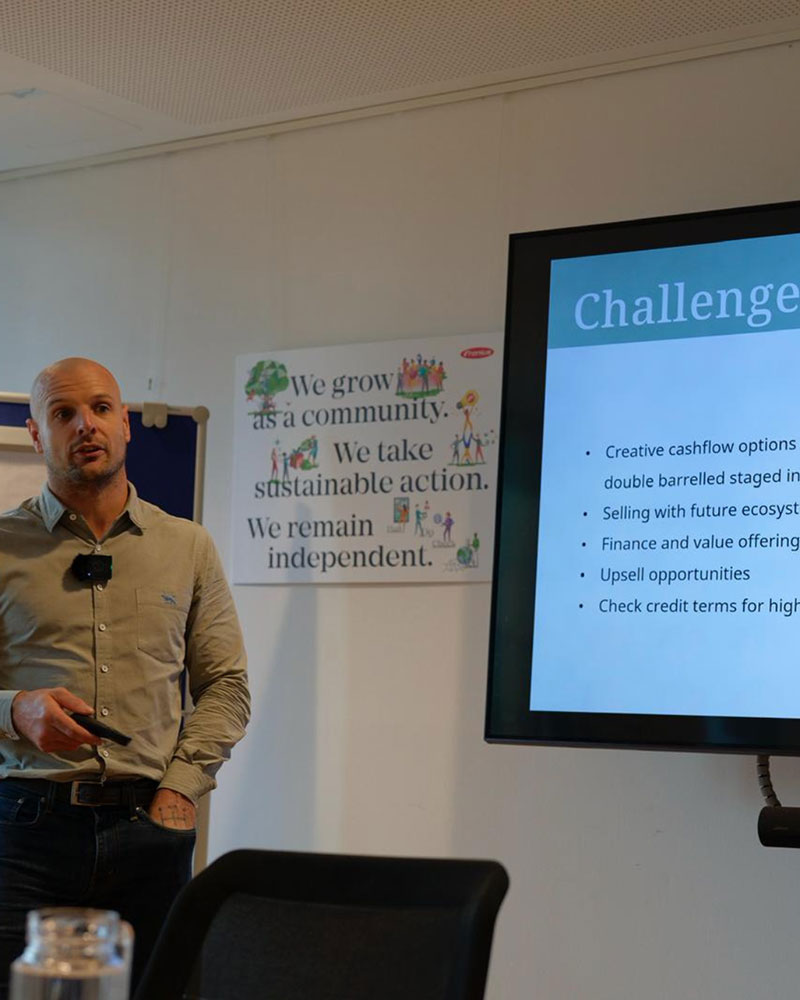
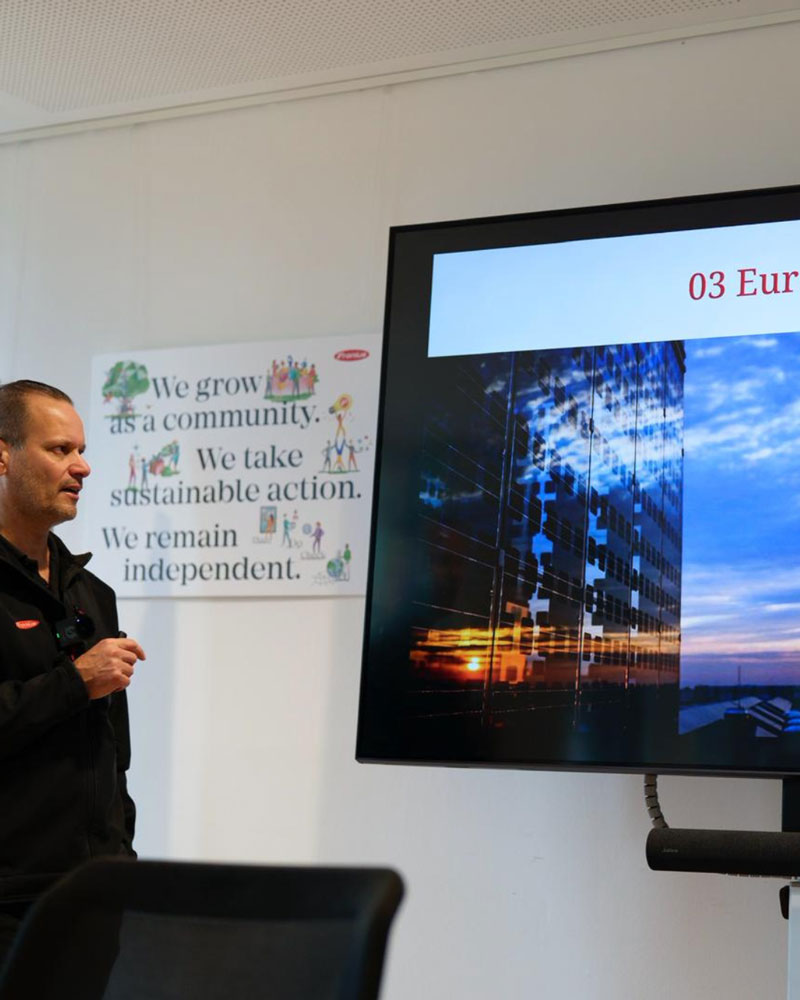
Tesla Energy Tech Talk Event, Tesla Showroom, O’Connor, December 2024: Derek McKercher.

Leading Western Australia’s Solar Revolution

Since our founding, Perth Solar Warehouse has helped thousands of homeowners and businesses harness the power of solar and battery storage. Becoming a Tesla Premium Certified Installer reaffirms our position as Western Australia’s leader in cutting-edge energy solutions.

We’ll continue to uphold the high standards that earned us this recognition, ensuring that every customer enjoys the seamless, high-performance energy experience Tesla is known for. 

It’s free to inquire. Get a quote from one of Tesla’s top 2% most trusted installers in Perth, Western Australia.

Ready to Power Your Home with Tesla?

Discover the benefits of working with a Tesla Premium Certified Installer. If you’re thinking about installing a Tesla Powerwall, expanding your solar capacity, or exploring energy storage for the first time, the team at Perth Solar Warehouse is here to assist you in taking the next step

📞 Contact us today to speak with a Tesla-certified expert or explore our Tesla Powerwall solutions to start your journey toward energy independence.

Perth Solar Warehouse — Proven. Certified. Tesla Premium.

PSW Achieves Bureau Veritas Certification ISO 9001, 45001, 14001

bureau veritas building

Perth Solar Warehouse is proud to announce a significant milestone in its journey toward operational excellence and industry leadership: the achievement of ISO 9001 (Quality Management), ISO 45001 (Occupational Health and Safety Management), and ISO 14001 (Environmental Management) certifications. Attaining all three internationally recognised standards simultaneously demonstrates the company’s strong commitment to quality, workplace safety, and environmental responsibility.

Contents

A Milestone of Excellence in Solar

In a rapidly growing and competitive renewable energy market, trust and reliability are key factors that customers look for in a solar provider. These ISO certifications reaffirm Perth Solar Warehouse’s dedication to delivering superior solar energy solutions backed by robust management systems and a culture of continuous improvement.

“Achieving these three certifications at once demonstrates that our team is deeply committed to doing things the right way—by our customers, our people, and the planet,” said Derek McKercher, Director. “This is more than a badge of honour; it reflects the standards we hold ourselves to every day.”

ISO 9001: Quality You Can Trust

The ISO 9001 Quality Management System certification signifies that Perth Solar Warehouse consistently delivers products and services that meet both customer expectations and regulatory requirements. This framework ensures every process—from initial consultation and system design to installation and customer support—is guided by a focus on precision, reliability, and continuous improvement.

For customers, this translates into confidence that their solar investment is supported by proven systems and verified quality assurance practices at every stage.

ISO 45001: Prioritising Health and Safety

The ISO 45001 Occupational Health and Safety Management System certification underscores Perth Solar Warehouse’s commitment to protecting the well-being of its employees, contractors, and partners. The certification ensures that rigorous safety standards and proactive risk management are integrated into every aspect of operations—from warehouse logistics to rooftop installations.

This achievement highlights the company’s belief that the drive for renewable energy should never come at the expense of worker safety. It also reinforces the message that Perth Solar Warehouse values its people as its greatest asset.

ISO 14001: Valuing the Planet We Power

As a renewable energy provider, environmental responsibility is central to Perth Solar Warehouse’s mission. The ISO 14001 Environmental Management System certification formally recognizes the company’s efforts to minimize environmental impact, reduce waste, and promote sustainability across its operations.

From responsible sourcing and recycling programs to energy-efficient facility practices, the certification confirms that environmental care is built into the company’s DNA—not just its products.

It's a Win for Customers, Employees, and the Environment

This triple certification achievement marks the beginning of a new chapter for Perth Solar Warehouse. As the company continues to expand its reach and impact in Australia’s renewable energy landscape, maintaining and building upon these standards will remain central to its strategy.

“Our customers trust us to deliver energy solutions that are not only effective but also responsible,” said Derek McKercher. “These certifications affirm that trust—and strengthen our resolve to keep raising the bar.”

With ISO 9001, ISO 45001, and ISO 14001 now firmly embedded in its operations, Perth Solar Warehouse enters 2025 with renewed confidence and a clear vision: to lead the solar industry through excellence in quality, safety, and sustainability.

References

Certified under our broader regional trading name, PSW Energy, for enhanced market relevance, Perth Solar Warehouse and PSW Energy are wholly owned cooperative businesses of McKercher Corporation Pty Ltd, EC010771.

Certificate: ISO 9001:2015ISO 45001:2015ISO 14001:2018

Policy: Health, Safety, Environment, Quality

Organisational acknowledgement: McKercher CorporationPSW Energy

Interest-free solar and battery: how the WA Government’s $10,000 loan changes the calculation

Interest Free Solar Deal Perth WA

The interest-free solar conversation used to begin and end with private finance providers — Brighte, Plenti, HUMM and a repayment plan you arranged through your installer. That model still exists, but it’s no longer the most compelling option for eligible Western Australian households.

Since 1 July 2025, the WA Residential Battery Scheme has included an optional no-interest loan of up to $10,000, administered by Plenti, as part of the state government’s battery uptake program. For households that qualify, this is a structurally different proposition to a vendor-arranged finance product and it warrants its own analysis.

Contents

What the WA scheme actually offers

The WA Residential Battery Scheme delivers two financial benefits that can be combined:

1. A government rebate on the battery

The rebate is calculated per kWh of usable battery capacity, capped at 10 kWh: 

This rebate stacks with the federal Cheaper Home Batteries Program — a separate federal initiative that delivers approximately a 30% upfront discount on eligible batteries (for usable capacity between 5 kWh and 100 kWh, claimable on the first 50 kWh). The combined effect can meaningfully reduce the installed cost before financing is even considered.

2. A no-interest loan (optional, means-tested)

Loan Amount

$2,001 to $10,000

Term

3 to 10 years

Interest

0% Fixed

Administered by

Plenti

Household gross annual income must be under $210,000. Credit assessment applies.

The loan can be used to cover the battery and related equipment, including inverters and solar panels, where installed as part of a battery package under the scheme. 

💡 Important: Participation in a Virtual Power Plant (VPP) is mandatory to access the rebate and loan. The VPP agreement period is two years, after which households can opt out.

Is the interest-free loan right for you?

The same honest question that applied to private interest-free solar finance applies here — perhaps more so, because the rebate and loan together are more likely to produce a genuine net benefit than a solar-only repayment plan ever was.

The original challenge with solar-only interest-free deals was misalignment between generation and consumption. Solar produces during the day; most households consume energy in the morning and evening. Without a battery, bill savings depend almost entirely on how much daytime load you can shift — an effort that requires behavioural change and, ideally, a consumption monitor to guide decisions.

A battery changes that dynamic. It captures daytime solar generation and makes it available after sundown, when household demand typically peaks and grid energy costs the most. In the Synergy area, the DEBS export rate during peak hours (3pm-9pm) is 10c/kWh — a fraction of what you pay to import at the same time. A battery earning you avoided imports is almost always more valuable than exporting to the grid at 10c and buying back at the retail rate.

This is why the WA scheme’s structure makes sense for many households: it finances the component — a battery — that most directly closes the gap between what solar produces and what you actually save. 

Making the numbers work: consumption still matters

State financing doesn’t change the physics of a solar-battery system, and the consumption profile logic remains valid.

Load shifting still improves outcomes. Running your dishwasher in the morning rather than after dinner, pre-cooling your home during midday solar production, and timing high-draw appliances to avoid evening peak periods all reduce how much you draw from the battery (and the grid) during expensive hours.

An energy consumption monitor — from around $390 added to the system — remains one of the highest-value additions to any solar installation. It puts generation, import, and export data in one place, replacing guesswork with actionable information. Perth Solar Warehouse recommends this addition wherever provision allows.

The Synergy Midday Saver tariff is also worth understanding if you’re evaluating load management options, as it offers the lowest cost-per-kWh during daytime hours for eligible customers. 

How to apply through Perth Solar Warehouse

Perth Solar Warehouse, operating under the PSW Energy brand, is listed by Plenti as an accredited WA Residential Battery Scheme vendor in the Synergy service area. Homeowners don’t lodge rebate applications directly — accredited vendors handle this through the scheme’s approved channel.

The scheme is funded for up to 100,000 rebates. Availability is finite.

Comparing your options

Feature
WA Scheme (rebate + loan)
Private finance
No finance
Upfront cost reduction
Govt rebate + federal STC discount
Nil
Nil
Loan interest
0% fixed (scheme-administered)
0% vendor-arranged (merchant fees may apply)
n/a
Income test
Yes (under $210,000 gross)
Generally no
n/a
Battery included
Required
Optional
Your choice
VPP required
Yes (2-year minimum)
No
No
Best suited to
Eligible households wanting battery + govt-backed finance
Solar-only or flexible product preference
Households with capital to deploy outright

💡 Note: Perth Solar Warehouse remains an authorised vendor with Brighte and Plenti for private interest-free finance arrangements, where these better suit a customer’s situation or product preference.

Ready to check eligibility?

Request a battery quote from Perth Solar Warehouse and note whether you’d like to explore the WA scheme’s no-interest loan. We’ll confirm your approved product options, calculate the combined rebate value, and lodge the application through the correct channel.

WA Residential Battery Scheme guidance, DEBS pricing schedule (effective 1 July 2025), and federal Cheaper Home Batteries Program information current as of April 2026. Scheme availability and rebate rates are subject to change – verify current program status before proceeding.

Synergy electricity rates Perth 2025: Measuring increases

Synergy Kaya GAs fired power station with blue sky in the background image for Synergy Electricity Rates Perth WA

How much will Synergy electricity rates increase in 2026 and beyond? We’ve indexed a history to 2014 of the Synergy electricity rates Perth customers paid out. We then used the Supply Charge per day and Cost per kWh unit information to provide a level of guidance for the next 10 years if staying on course. Of course, none of this is financial advice, so take it with a pinch of salt.

Contents

Perth’s population continues to grow and will continue to do so in the foreseeable future. As the population grows, energy generation and infrastructure costs increase to expand the grid. Reflected in a history of Synergy electricity rate increases in Perth and the South West of Western Australia.

History of Synergy electricity rates

The figures below represent annual Synergy’s Home Plan A1 Tariff rate information since 2014. In 2017, the Supply charge per day nearly doubled, yet the Cost per kWh unit rate remained the same as the previous year. 2020 was an unprecedented year with the COVID-19 pandemic, and Synergy electricity rates on the Home Plan A1 Tarriff were responsibly frozen.

Home plan (A1)
Supply Charge per day
Cost per kWh
2014
45.1516 c
24.5961 c
2015
47.1834 c
25.7029 c
2016
48.5989 c
26.4740 c
2017
94.9058 c
26.4740 c
2018
101.549 c
28.3273 c
2019
103.3263 c
28.8229 c
2020 Frozen (COVID economic relief)
103.3263 c
28.8229 c
2021
105.1400 c
29.3273 c
2022
107.7685 c
30.0605 c
2023
110.4600 c
30.8120 c
2024
113.2200 c
31.5823 c

Regarding cost per bill format, the Synergy electricity rates Perth customers paid increased by 2.7% on average annually, a combination of daily supply charge and unit cost (Cost per kWh). For example, a home consuming 25 units daily in 2014 would have had an energy bill similar to $396.03 per bi-monthly bill cycle. In 2025, that bill will be $541.66.

Our products reduce electricity bills. Try this Express Quote feature as a comparison.

Future bill potential

Using the previous decade’s Synergy electricity rates, which increased at an average of 2.7% p.a from 2014 to 2024 it’s possible to assume Synergy electricity rates in equal distance in time. Considering energy supply costs and electricity grid upkeep, a 10-year linear trend should be considered a best-case scenario. Converting the Home Plan A1 tariff to a bi-monthly bill value of 25 units (kWh) per day:

Home plan (A1)
Average bill cost (25 units per day)
2026
$556.28
2027
$571.30
2028
$586.73
2029
$602.57
2030
$618.84
2031
$635.55
2032
$652.71
2033
$670.33
2034
$688.43
2035
$707.02

Likelihood of increases beyond average

2025 is an interesting year. Compounding geopolitical uncertainty affects wholesale energy prices regardless of extraction points. Western Australia is a state that’s part of a country with a policy to reduce carbon emissions from high-carbon-emitting power sources by 2050. Beyond emission reduction, increased generation points and ‘mix’ (various energy sources) will more likely stabilise Synergy electricity rate increases as opposed to a one-fuel grid supply more susceptible to global influence.
Here are the current global and local factors that directly influence Synergy’s electricity rates through supply chain and market values.

Inflation. After a more turbulent 24-month period, the downstream effects of inflation on consumable items are highly felt. Utilities are not immune to inflation.

East Coast (Australia) energy. Even if it’s a more variable market, factors affecting the east coast of Australia eventually filter through to Western Australia. Western Australia mines certain combustion fuel supplies, but local and global supply/demand affect wholesale prices.

Skilled wages: Australia has a general unemployment rate of around 4% and a higher-than-average deficit in skilled energy workers to upkeep and procure the current electricity network. Contributing to a downstream value currently at $1.13 per day supply charge and 31 cents per unit of energy consumed.

Russia and Ukraine. Although Russia doesn’t supply Western Australia with oil or gas, its 12% global share affects world wholesale energy prices, which form the composition of Western Australia’s energy mix

China and Taiwan. Should tensions between China and Taiwan escalate, the first effect on Australian supply chains will be costs and insurance variations for transport within the South China Sea. 

Emission reduction targets. Carbon-intensive energy generation for expanding populations doesn’t positively impact the environment. Achieving emission reduction targets is required for Australia to have a valued voice at the geopolitical table. Australia has a Net Zero international commitment.

In 2025, an energy mix on the grid is required to safeguard Synergy’s electricity rate certainty by reducing dependency on a single fuel source.

Choose improved energy security. Perth Solar Warehouse quotes come with no spam.

Improved lower cost energy options

In the same way it’s difficult to imagine a present without internal combustion vehicles, one hundred years ago, we transitioned from horse-drawn transportation systems. Energy generation from sustainable sources is the long-term global approach to achieving a sustaining balance of energy.

Solar power on home rooftops provides improved energy security by harnessing the daily rain of photons. With solar energy, it’s wise to think of it as water raining down on a roof. Avoid wasting energy down the drain (on the grid) and improve your energy security by adding a solar battery to store unused energy from the sun.

One step further on your electrification journey, add a solar-optimised EV charger to power your electric vehicle solely from the sun. Also take advantage of reduced energy supply tariffs, such as Synergy’s EV add-on tariff. According to required international emission reduction standards affecting most developed nations, Electric Vehicles are estimated to account for 60% of new car sales by 2030.  

Home plan (A1)
Example bill cost (25 units per day)
Example bill cost (25 units per day) with 6.6 kW solar @ 60% utilisation
2026
$556.28
$228.51
2027
$571.30
$228.52
2028
$586.72
$234.69
2029
$602.57
$241.02
2030
$618.84
$247.53
2031
$635.55
$254.22
2032
$652.71
$261.08
2033
$670.33
$268.13
2034
$688.43
$275.37
2035
$707.02
$282.80

Annual daily production average of 30 units per day during sunlight hours, excluding DEBS (Distributed Energy Buyback Scheme) credits.

Generate your own power. Choose hassle-free solar from Perth Solar Warehouse.
Energy reduction options

Try this quick experiment. Consider how many of the following devices are a part of your everyday world:

Quantity
Appliance, Device
Phones
Tablets
TV’s
Computers
Game consoles
Dishwasher
Benchtop kitchen appliances (Thermomix, microwave, toaster, kettle, air fryer)
Power tools
Battery/electric gardening tools
e-Scooters
Pools/ spas
Air conditioners
Fridges & freezers
Drone charging
Smart home devices (Google Home, Alexa etc)
Aquariums
Hot water
Reticulation pumps
Electric vehicle

Next, add a quantity next to each device in your home and consider how many of these devices existed ten years ago. Was there an increase? If so, you’re part of the 95% who are also adapting to technology for modern-day convenience. Consider it an accumulation over time that increases as the technology era makes a more significant presence. 

A solar energy system installed with an energy consumption monitor can help visually identify energy increases over time while mitigating the effects of Synergy electricity costs during the day.

If you want to make your home or business a little less Synergy dependent, we can assist. Perth Solar Warehouse is your proven provider of home energy technology with a dependable local business history.

EUPD Research Top Installer Awards 2024 and a Digital Revolution in Solar

EUPD Research Top Installer Awards 2024 presentation banner (left to right): Daniel Fuchs, Nicole Bilman and Derek McKercher holding the EUPD Installer Award 2024 shield

The vibrant atmosphere of Melbourne’s Cargo Hall Southbank recently played host to the 2024 EUPD Research Top Installer Awards Australia. Amidst industry leaders and innovators, Perth Solar Warehouse once again claimed a top spot, marking a second consecutive year as an award recipient. This achievement underscores a commitment to customer satisfaction, quality installations, and innovative solutions in the Australian solar market. The awards ceremony highlighted Perth Solar Warehouse’s commitment to setting the benchmark for innovation and excellence in the industry.

Contents

Key points

EUPD Research, a globally respected authority in market research, employs a meticulous approach to identify top installers. Their methodology goes beyond simple sales figures, delving into the heart of customer experience. By combining customer satisfaction surveys with installation volume data, EUPD ensures that awardees are not just successful installers, but trusted partners in their customers’ solar journey.

For Perth Solar Warehouse, this recognition powerfully validates a unique approach to the market through a pioneering digitally enhanced buying experience.

Revolutionising the solar buying journey

Perth Solar Warehouse understands that navigating the world of solar can be daunting for many homeowners. The answer? A cutting-edge digital platform that simplifies the entire process, making it more transparent, convenient, and customer-centric. This innovative approach has resonated with customers, contributing significantly to high satisfaction ratings and, ultimately, EUPD Research Top Installer Award 2024 recognition.

EUPD Research Top Installer Awards 2024 and 2023 shield with Perth Solar Warehouse technician installing solar panels on a white roof

Award winning digital buying experience

Needing an in-home consultation to quote a modern solar energy system accurately is a myth in 2024. In 2010, solar panels were more expensive, and there was a lack of accurate design software. Therefore, precise sizing and a more consultive process for customer needs were valid (today, in-home ‘consultants’ don’t even measure from the on roof – they’re there to sell you). With most system sizes now standardised and spare time more elusive than ever, the need to schedule on-site quotes can be more of a hindrance for the astute shopper seeking a proven solution.

One step further, we can improve value through digitalisation. Sales consultations are rarely free, and the cost (commission) is often embedded in an inflated price for the end user. If a remote site assessment proves inconclusive, a Perth Solar Warehouse technician conducts a site review based on a customer’s preferred system. Most importantly, the quoted/contracted price is always the final price, earning Perth Solar Warehouse a strong community and local trust for over a decade.

Growing consumer appeal:

  • Transparency: Customers gain access to clear and detailed information about products, pricing, and installation processes, eliminating any ambiguity and fostering trust.
  • Convenience: The entire journey, from initial inquiry to system design and installation schedule, can be managed online, saving customers valuable time and effort.
  • Personalised Solutions: The digital platform allows customers to explore various options and customise their solar systems to perfectly match their energy needs and budget.
  • High-Quality Outcomes: By streamlining the backend process and ensuring clear communication, Perth Solar Warehouse minimises potential errors and provides a smooth and efficient installation experience.

This commitment to a seamless digital experience aligns perfectly with the values recognised by the EUPD Top Installer award. By prioritising customer satisfaction and embracing innovation, Perth Solar Warehouse is meeting the demands of today’s tech-savvy consumers and setting a new standard for the industry.

Need an award-winning comparison? Get a hassle-free Perth Solar Warehouse quote.

A woman led success story

Perth Solar Warehouse’s EUPD Research Top Installer Award 2024 success is further amplified by the fact that it is one of the few Australian solar companies with proven female leadership, Nicole Biman. Nicole’s leadership offers balance in a predominantly male-led industry and fosters a company culture prioritising customer-centricity, employee empowerment, and a passion for sustainable solutions.

Read more about Nicole Bilman on McKercher Corporations acknowledgment.

Credit to the entire team

While Biman’s leadership sets the tone, the entire Perth Solar Warehouse team plays a vital role in the continued success. Their dedication to providing exceptional service, from the initial interaction to the final installation, ensures that every customer feels valued and supported. This strong team spirit is palpable and undoubtedly contributes to a high customer satisfaction rating.

Thank you, team! the EUPD Research Top Installer Award 2024 is your recognition as an elite performer in Australia.

Daniel Fuch, Nicole Bilman and Derek McKercher in front of the EUPD Research Awards 2024 banners at the recent ceremony

Image: Daniel Fuchs (EUPD Research), Nicole Bilman and Derek McKercher on behalf of Perth Solar Warehouse.

The future of solar in Australia

Solar and battery technology is progressing more digitally each day, as are customer purchasing preferences. Perth Solar Warehouse connects customers with industry-leading sustainable technology on a hassle-free platform that respects the customer through transparency and detail.

Perth Solar Warehouse’s EUPD Research Top Installer award is a testament to a commitment to excellence in every facet of business. By combining a customer-focused approach with digital buying and management solutions, we are shaping the future of solar in Australia and inspiring other companies to raise the bar through modern convenience. As Australia transitions towards more renewable energy, Perth Solar Warehouse’s innovative approach is a shining example of how technology, transparency, and teamwork can pave the way for a brighter, more sustainable future.

Reduce your electricity bill: Synergy’s Midday Saver tariff + battery

Tesla Powerwal 3 pictured on the outside of a suburban Australian home identifying how alone a battery alone (without solar panels) can influence bills savings from the Synergy Midday Saver Tariff in Perth and Bunbury region Western Australia

Solar panels not included. Many homes in the greater Perth region of Western Australia can’t enjoy the benefits of solar panels due to property incompatibilities (shade, available surface area, etc.) yet still seek to earn greater energy security while reducing their electricity bills. Fortunately, solar energy is available on the grid during peak daylight hours and it’s cheap.

It is so abundant that Synergy is offering the cost of electricity during peak solar production periods at a quarter (8.4050 cents/kWh) of the Home Plan A1 tariff price. Here’s how you can reduce your bills by combining only a home battery system and the Synergy Midday Saver tariff.

Contents

Key points

A modern energy grid in one paragraph: The decentralisation of energy networks provides greater energy security for users and expanding populations, as they are less subjected to singular supply interruptions. Alongside decentralisation, variable fuel sources offer extra protection from potential supply market wholesale cost volatility. Perhaps even complication, but we’ve never had a more stable grid. Welcome to Western Power’s South West Interconnected System (SWIS for short), also known as ‘The Grid’, where Synergy is the local retailer.

Now, consider that the Western Power grid plays host to an energy market. Daily, the most affordable energy supplied at a nominated period takes preference to satisfy the network’s requirements. In Perth, there is an oversupply of solar energy between 9 am and 3 pm, enticing heavy day-time energy users with a sweeter deal. 

Tesla App showcased on two mobile phone displays to illustrate the advanced features within the Tesla Energy ecosystem. Perth Solar Warehouse is Perth local Tesla Premium Certified Installer.

Image: Daily solar energy yield between 9 am to 3 pm peak periods.

Quick Tip 1: Load shift when choosing the Synergy Midday Saver tariff, shift programmable appliance use between 9 am and 3 pm. Consider the following appliances: dishwasher, washing machine, dryer, e-mobility charging, pool pump, air conditioner (pre-conditioning), etc., to operate on cheaper grid-supplied solar energy at 8.4050 cents/kWh.

Quick Tip 2: Add a suitable battery to bridge the more costly 3 to 9pm ‘Peak’ period. Suitability depends on individual energy use. Tesla has almost mathed the ideal battery size for most homeowners during this period at 13.5 kWh (so much so that it didn’t change between models: Powerwall 2 vs 3). Many other batteries are either similar in energy density or more modular to achieve an ideal level of energy security. Cost per kWh is where battery customers in this segment must focus.

Need a home battery quote? Perth Solar Warehouse is a Perth local installer for proven technology.

Scenario A

Sarah lives in Perth and is on the Synergy Midday Saver tariff. By knowing how to load shift certain appliances towards cheaper energy, Sarah now has enough energy storage in reserve to ensure she can clear the more expensive ‘Peak’ period. Sarah has a Tesla Powerwall 3 with a usable capacity of 13.5 kWh installed in her home, but she does not have solar panels.

Midday Saver Tariff Rates:

  • Peak (3 pm – 9 pm): 52.5313 cents/kWh
  • Off-Peak (9 pm – 9 am): 23.1138 cents/kWh
  • Super Off-Peak (9 am – 3 pm): 8.4050 cents/kWh

Scenario Calculations: 

Charging the Powerwall: Sarah decides to fully charge her Powerwall during the Super Off-Peak period, 9 am to 3 pm.

Energy required: 13.5 kWh

Cost to charge: 13.5 kWh x 8.4050 cents/kWh = $1.134

Using the Powerwall: Sarah uses the entire stored energy in the Powerwall during the Peak period (3 pm to 9 pm) to power her home appliances.

Energy used: 13.5 kWh

Cost avoided during Peak: 13.5 kWh x 52.5313 cents/kWh = $7.054

Net Savings: Calculate the overall savings by subtracting the cost to charge the Powerwall and the daily supply charge from the cost avoided during peak hours.

Net savings: $7.054 – $1.134 – $1.2608 = $4.659

It’s important to note that the daily supply charge of the Synergy Midday Saver tariff is approximately 13c more per day than the Home Plan A1 Tariff. To consider this difference, subtract 13c from the $4.659 saved daily. 

$4.659 – $0.13 = $4.53 savings per day

In this scenario, even without solar panels, Sarah is able to save $4.53 by strategically charging her Powerwall during Super Off-Peak hours and utilising the stored energy during Peak hours. This demonstrates how a home battery can be leveraged to optimise energy costs even for those without solar generation.

Additional benefits of the Synergy Midday Saver tariff are the reduced Off-Peak rates (9 pm to 9 am) rates of 23.1138c per kWh off-peak energy cost (vs Home Plan A1 Tariff: 31.5823c per kWh). Consider this an improved base load power supply cost for 24/7 appliances such as refrigerators, freezers, after-hours air conditioning use (if required), fans, and appliances on stand-by mode.

Additional Considerations:

  • The actual savings may vary depending on the household’s energy consumption patterns and the specific appliance use during different tariff periods.
  • It’s important to analyse your energy usage and tariff rates to determine if a home battery would be a cost-effective solution for your situation.
  • Daily supply charges vary between different Synergy tariffs.
  • Tariff rates change anually.
Person holding an iPad with a Synergy bill displayed identifying Home Plan A1 Synergy Electricity Tariffs

Image: Synergy Midday Saver tariff provides an energy-saving opportunity for those without solar panels.

Comparison Tariffs

Synergy is a retail energy business, so the numbers must provide a level of profitability, regardless of the energy supplied from the grid. Below is a brief comparison of the three main tariffs available in 2024/25:

Home Plan (A1)

Your energy consumption knowledge: Easy

  • Supply charge (daily): $1.1322
  • All day/night: 0.315823 cents/kWh

The set-and-forget ‘easy’ Synergy electricity rate more appealing to users who choose to be less concerned about how and when they use energy. The rates within the Synergy Home Plan (A1) tariff ensure a mid-range cost of electricity. How much you pay depends on your ‘anytime’ energy consumption.

Bill reduction potential: N/A. Best for those who want to operate energy anytime and not worry about variable cost benefit options.

Midday Saver

Your energy consumption knowledge: Intermediate

  • Supply charge (daily): $1.2607
  • Peak (3pm – 9pm): 52.5313 cents/kWh
  • Off-Peak (9pm – 9am): 23.1138 cents/kWh
  • Super Off-Peak (9am – 3pm): 8.4050 cents/kWh

The Synergy Midday Saver tariff is ideal for users who have a finely tuned operational energy sense. You know what appliances you’re using and when you’re using them, and mastering energy bill reduction by optimising habits in line with low-cost energy.

Bill reduction potential: Improved through greater energy market exposure and the ability to capitalise on the opportune time. Strongly consider home energy storage to bridge peak charge costs.

EV Add On

Your energy consumption knowledge: Advanced

  • Supply charge (daily): $1.2607
  • Peak (3pm – 9pm): 52.5313 cents/kWh
  • Off-Peak (6am – 9am / 9pm to 11pm): 23.1138 cents/kWh
  • Super Off-Peak (9am – 3pm): 8.4050 cents/kWh
  • Overnight electricity charge (11pm to 6am): 18.9113 cents/kWh

The EV Add-On tariff is effectively the same as the Synergy Midday Saver tariff except for one improved cost layer: the Overnight electricity charge between 11pm and 6am (but you must own an electric vehicle). This can effectively be used to top up the home battery alongside an electric vehicle ready for use with the morning’s energy use. EV add-on should only be considered for those with an advanced knowledge of how and when precisely to operate certain loads.

Bill reduction potential: Varied. Primarily, you’re now aiming to supplement petrol energy at a lower cost/km travelled for your vehicle and prepared to schedule home electricity consumption on an advanced level. So, the costs you save through optimising appliance use will host an EV charging component (approx. 10 kWh daily). But if you’re on this plan, you know what you’re doing. Higher or similar Synergy bills are likely, but overall energy spending (Average household energy profile: electric, natural gas, oil/petrochemical) will be reduced if monitored and aligned with low-cost inputs. Strongly consider bidirectional EV charging capabilities or home energy storage to bridge Peak charge costs.

Return on intial investment

Return on investment calculations are always subjective yet provide a level of insight into the approximate timeframe you are likely to see your initial investment is recovered in savings and the point at a point of where your investment makes money. However, when it comes to batteries, many focus on energy savings alone at the current rate and neglect alternative benefits that may improve calculations:

  • Future ‘Peak’ rate increase protection
  • Inflationary protection
  • Additional energy security, such as blackout protection
  • Advanced operational features including energy profiling and solar optimisation [with solar] 
If you’re using the Synergy Midday Saver tariff with a battery and no solar the return on investment in energy savings alone is less than ten years in current rate energy savings. These added benefit may well improve ROI calculations depending on the individual scenario and total installed battery cost.

Midday Saver with 1 x Battery [no solar]

However, we can assume a scenario with base-level costs and total daily battery cycling with the intention of bridging the Peak period rates at the current tariff rate, which historically increases at approximately 2.5 -3% p/a for fossil fuel-generated energy.

Scenario A: Sarah buys a Tesla Powerwall 3 installed from Perth Solar Warehouse.

Purchase price: $15,990 [current prices]

Daily energy savings: $4.53

Calculated ROI: $15,990 ÷ 4.53 = 3530 days/ 9.7 years

Even without solar panels, Sarah can now power her home from low-cost solar energy plus protect herself from blackouts and future price increases of fossil-fuel-generated energy. With Tesla Powerwall 3’s software and smart tariff utilisation features, she has the ability to improve load shifting to low-cost power hours, further expediting her return on investment.

Midday Saver with 2 x Batteries [no solar]

Sarah draws more power than most homes between 3 p.m. and 9 p.m., so she decides to double down on her investment in a more suitable battery capacity of 27 kWh. Considering the initial battery price factors a major installation component cost, additional capacity is far simpler to install affecting an improved addition capacity cost.

Scenario A: Sarah buys 2 x Tesla Powerwall 3’s installed from Perth Solar Warehouse totalling 27 kWh of power reserve.

Purchase price: $15,990 + $13990 = $29,980

Daily energy savings: $9.06

Calculated ROI: $29,980 ÷ 9.06 = 3309 days/ 9 years

Increasing her energy storage capacity improves Sarah’s initial return on investment calculations while contributing to more sustainable energy sources with added energy security benefits.

Using the Synergy Midday Saver tariff blindly and unprepared will not reduce your electricity bills. However, if you can better optimise energy consumption alongside a battery to skip the more costly Peak period, where opportunities exist with improved energy independence and security.

References

Synergy: Energy plans

Western Australia’s first Tesla Powerwall 3 arrives ushering in a new era

Western Australia's first Tesla Powerwall 3 unit pictured in it's reusable delivery case inside the Perth Solar Warehouse showroom - Bibra Lake

Perth, Western Australia – September 17, 2024, marked a significant day for renewable energy in Perth as Perth Solar Warehouse proudly received the first Tesla Powerwall 3 in the city. This milestone event signifies a leap forward in energy storage technology, offering Perth residents greater control over their energy consumption and a more sustainable future.

Tesla Premium Installer. Get your copy of our latest catalogue for Perth’s best Powerwall 3 deals.

Key points

The Tesla Powerwall 3 is the latest iteration of Tesla’s revolutionary home battery system. Known for its sleek design, advanced features, and seamless integration with solar panels, the Powerwall 3 is poised to change how Perth homeowners manage their energy needs.

Perth Solar Warehouse, a leading solar and battery solutions provider in Western Australia, was thrilled to be the first to receive this groundbreaking product. “We are incredibly excited to introduce the Tesla Powerwall 3 to Perth,” said Derek McKercher, Director of Perth Solar Warehouse. “This cutting-edge technology represents a major step towards a more capable and resilient sustainable energy future for our city.”

The Powerwall 3 boasts several improvements over its predecessors. Its increased storage capacity allows homeowners to store more solar energy, reducing their reliance on the grid and saving on electricity bills. The new Powerwall also features a faster charging rate, ensuring it can quickly replenish its reserves even on cloudy days.

One of the most significant advantages of the Powerwall 3 is its ability to provide backup power during outages. With Perth’s increasingly unpredictable weather patterns, power outages are becoming more frequent. The Powerwall 3 offers peace of mind, ensuring that essential appliances and devices remain operational even when the grid goes down.

The arrival of the Tesla Powerwall 3 in Perth will accelerate the broader adoption of solar and battery systems as an all-in-one solution towards holistic energy security. As more homeowners recognise the benefits of energy independence and resilience, the demand for these solutions will likely surge due to continuous grid electricity costs.

Tesla Trusted Installer. Premium-certified installers make up the top 2% of installers.

Perth Solar Warehouse is committed to supporting this transition. The company offers comprehensive solar and battery installation services, ensuring homeowners can seamlessly integrate the Powerwall 3 into their existing systems. Perth Solar Warehouse’s team of experts also provides ongoing maintenance and support, ensuring that customers can maximise the benefits of their investment.

The Tesla Powerwall 3 is more than just a battery; it represents a shift in how Perth residents think about energy. It empowers homeowners to take control of their energy consumption, reduce their carbon footprint, and create a more sustainable future for themselves and their community.

Perth Solar Warehouse is proud to be at the forefront of this movement. The company’s dedication to providing innovative and sustainable energy solutions is helping to shape a brighter future for Perth. With the arrival of the Tesla Powerwall 3, Perth residents can now embrace a new era of energy storage, one that promises greater energy independence, resilience, and a cleaner environment for all.

As Perth continues its journey towards a more sustainable future, the Tesla Powerwall 3 is poised to play a pivotal role. It is a testament to the power of innovation and the potential of renewable energy to transform our lives. With Perth Solar Warehouse leading the way, Perth residents can now embark on a path towards a cleaner, more resilient, and energy-independent future.

Stand-out features

The Tesla Powerwall 3 boasts impressive specifications that make it a highly desirable energy storage solution for West Australian homeowners:

  1. Integrated Solar Inverter: A key feature of the Powerwall 3 is its built-in solar inverter, streamlining installation and reducing overall system complexity. This allows for direct connection to solar panels, maximising efficiency and minimising energy loss.  
  2. Power Output: With a continuous power output of 5 kW in Perth, Western Australia (Western Power requirements), the Powerwall 3 can comfortably handle the energy demands of most households, even during peak usage times. It can also support up to 20 kW of solar panel input, making it suitable for larger solar installations.  
  3. Compact and Scalable Design: The Powerwall 3 maintains its predecessors’ sleek and compact design while offering improved scalability. Three more 13.5 kWh battery units can expand it to a total capacity of 54 kWh, allowing homeowners to tailor their energy storage to their specific needs.  
  4. Enhanced Backup Capabilities: During power outages, the Powerwall 3 provides seamless and reliable backup power, ensuring that essential appliances and devices remain operational. Its quick backup transition time minimises disruption and ensures a smooth power supply.  
  5. Smart Energy Management: The Powerwall 3 seamlessly integrates with the Tesla app, allowing homeowners to monitor and manage their energy usage in real time. They can track their solar production, battery levels, and grid consumption, optimising their energy usage and maximising savings.  
  6. Virtual Power Plant (VPP) Compatibility: The Powerwall 3 is compatible with VPP programs, allowing homeowners to contribute their excess energy to the grid and earn additional income. This benefits individual households, helps stabilise the grid, and promotes a more sustainable energy future.  
  7. Durability and Longevity: The Powerwall 3 is built to last, with a 10-year warranty and a design that is resistant to harsh weather conditions. Its robust construction ensures that it can withstand the Australian climate and provide reliable performance for years to come.  

Tesla Powerwall 3 specifications

The Tesla Powerwall 3 boasts impressive specifications that make it a highly desirable energy storage solution for West Australian homeowners:

AC Electrical Specifications:

  • Continuous Power: up to 11.04 kW*
  • Peak Power: 22 kW for 10 seconds
  • Nominal Voltage: 230 V, single-phase
  • Nominal Current: 48 A
  • Backup Loads: Up to 185 A LRA
  • Grid Services: Virtual Power Plant (VPP) compatible
* DNSP regulated. Western Power network: 5 kW limit. 

DC Electrical Specifications:

  • Max. PV Input Power: 20 kW
  • Max. PV Input Current (IMP): 26 A
  • Max. PV Input Current (ISC): 30 A
  • Max. DC Voltage: 600 V
  • MPPT Voltage Range: 150-550 V

Battery:

  • Usable Energy: 13.5 kWh
  • Chemistry: Lithium-ion LFP
  • Round-trip Efficiency: 94.5%
  • Warranty: 10 years unlimited cycles

Inverter:

  • Type: Integrated DC-to-AC inverter
  • Efficiency: 97.5% CEC weighted

Physical:

  • Dimensions (H x W x D): 1105 mm x 609 mm x 193 mm (including glass front cover)
  • Weight: 130 kg
  • Mounting: Floor or wall-mounted, indoor or outdoor
  • Operating Temperature: -20°C to 50°C (performance may be de-rated above 40°C)
  • Enclosure Rating: IP65 (dust-tight and protected against water jets)

Other:

  • Connectivity: Wi-Fi, Ethernet, Cellular (optional)
  • Gateway Requirement: Tesla Gateway 2 is required for monitoring and control
  • Certifications: AS/NZS 4777.2, AS/NZS 5033, IEC 62109-1, IEC 62109-2
  • Safety Features: Overcurrent protection, overvoltage protection, overtemperature protection, and more

Tesla Powerwall 3 datasheet

Overall, the Tesla Powerwall 3’s standout specifications make it a compelling choice for Australian homeowners looking to embrace renewable energy and achieve greater energy independence. Its integrated solar inverter, increased power output, scalability, and intelligent energy management features offer a comprehensive solution for powering homes efficiently and sustainably.  

Silicon wafer prices rise, wholesale module prices likely to follow

Advanced stage of silicon wafers within the solar module manufacturing process, under a red light with an engineer observing through a processing window to identify that silicon wafer prices have stabilised and and downstream effect to overall module costs is coming.

The wholesale downward trend of solar module prices on a cost-per-watt level had to end eventually, and the tide may have just turned, citing an August increase in silicon wafer prices by LONGi and TCL Zhonghuan—two large manufacturers of silicon wafers used in solar panels. This comes as an overdue respite for solar module manufacturers seeking a return to profitability in 2025. So, what does this mean for the future solar energy landscape locally?

Need a solar quote? Perth Solar Warehouse is Perth’s local installer for proven technology.

Key points

Like all global markets, the solar energy market has endured an interesting period, with continued ripples affecting purchasing certainty at scale: COVID-19, the Russia-Ukraine conflict, US Manufacturing laws, and the overall complex international landscape, which affect supply chains in a start-stop, start-stop, start-again motion.

The recent increase in silicon wafer prices is a reprieve for manufacturers forced to sell excess stock below the cost of manufacture. Demand for silicon wafers is a sign that the previous market saturation has cleared, and pressure for increased production of the fundamental component used to build solar panels has returned internationally among a broader segment of solar panel manufacturers. Interestingly, a turn towards higher solar module prices is good for purchasers.

Technicians hands in rubber gloves holding a whole silicon wafer used in solar module construction

Image: Whole cell Silicon wafer used in solar panel construction.

Why are increased silicon wafer prices good?

Considering the new solar panel warranty is at least 25 years for residential rooftop solar panels, system owners need a manufacturer that is more likely to be around in 25 years. When writing, most solar panels at wholesale in Australia are close to or below the manufacturer’s production cost. All businesses have a limited window to exist without margin. An increase in silicon wafer prices signals that many remaining manufacturers have more likely weathered the loss and resumed taking new orders.

Forecast: Leading manufacturers will return to profitability in 2025/26 as demand firms through more countries adopt a more carbon-neutral future. Smaller module manufacturers will experience an enduring period of uncertainty.

What should purchasers consider?

1. The Small Technology Certificate (STC) value used to subsidise solar energy system costs in Australia will be reduced from the 1st of January 2025. Example: A $38 Small Technology Certificate value and 440W solar panel for multiplication of the most common system sizes in the Perth and Bunbury region of Western Australia:

3.9 kW

  • 3.9 kW = $1,456 – 2024 installation
  • 3.9 kW = $1,248 – 2025 installation

6.6 kW

  • 6.6 kW = $2,426 – 2024 installation
  • 6.6kW = $2,088 – 2025 installation

10.5 kW

  • 10.5 kW = $3,882 – 2024 installation
  • 10.5 kW = $3,327 – 2025 installation 

13.2 kW

  • 13.2 kW = $4,852 – 2024 installation
  • 13.2 kW = $ 4,159 – 2025 installation

19.8 kW

  • 19.8 kW = $7,279 – 2024 installation
  • 19.8 kW = $6,239 – 2025 installation

39.6 kW

  • 39.6 kW = $14,577 – 2024 installation
  • 39.6 kW = $12,478 – 2025 installation

99.8 kW

  • 99.8 kW = $36,717 – 2024 installation 
  • 99.8 kW = $30,908 – 2025 installation

2. Should silicon wafer prices continue to increase, downstream newly produced module costs will increase. Silicon wafers are a fundamental component of the greater global demand for improved sustainable energy resources in areas with abundant sunlight than alternative sustainable energy sources.

Weight to the argument

As the August 2024 PV Magazine article Chinese PV Industry Brief: Longi, TCL Zhonghuan Raise Silicon Wafer Prices points out, major silicon wafer manufacturers Longi and TCL Zhonghuan have recently increased their prices. This is due to several factors, including rising polysilicon prices and strong demand for solar panels. Price increases are expected to continue, which could lead to higher solar panel costs depending on alternative local market factors.

Man with safety glasses holding two silicon rocks in front of his face. Raw material prices have rebounded alongside silicon wafer prices - an intermediate element.

Image: Raw material Poly Silicon rock used in solar panel construction.

Like any market saturation, prices fall as the demand to move excess stock becomes more critical. Astute investors identify opportunities where rebound potential exists. With record-low wholesale cost p/Watt module prices and improved global demand for the fundamental component required for manufacturing solar panels, it may well be that a more opportunistic moment for a solar energy investment exists today.

Perth Solar Warehouse is committed to providing our customers with the latest information on the solar industry. If you are looking for local advice on a solar energy system that matches your needs without overcomplication, we can assist. 

Introducing the Aiko Neostar 2P: A New Standard in Solar Innovation

Drone photo of Aiko Neostar 2P solar panels installed within a small commercial premises

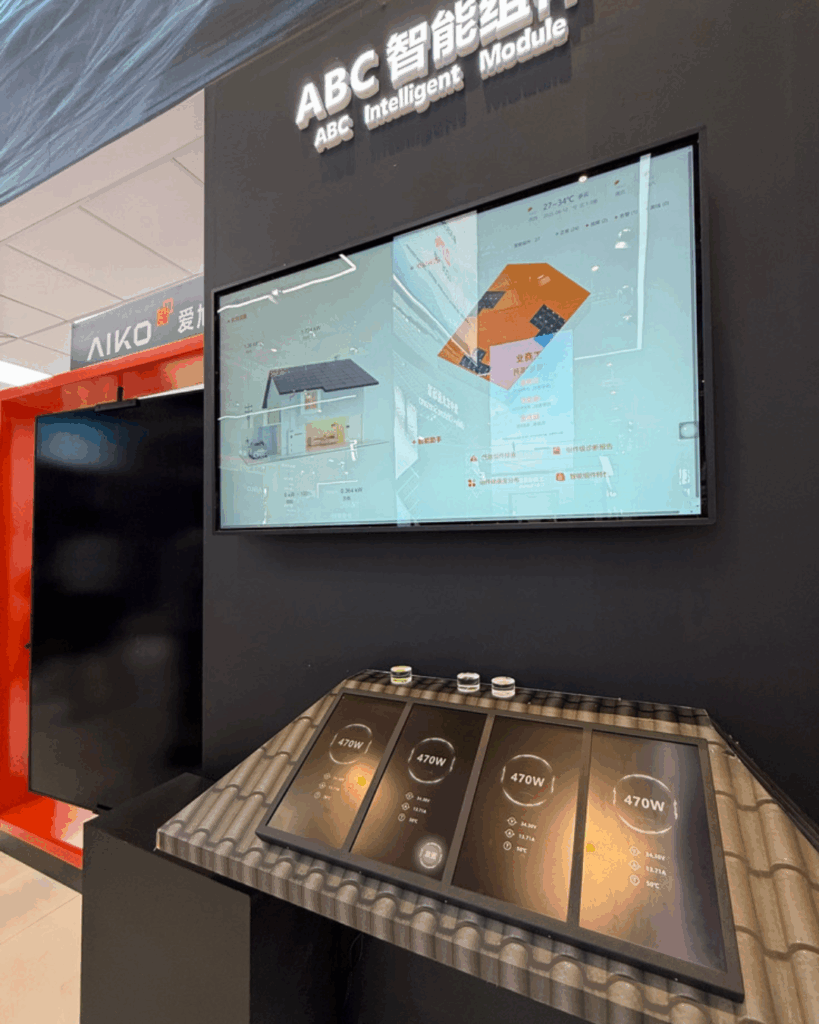
Perth Solar Warehouse is excited to unveil the latest addition to our solar panel lineup: the revolutionary Aiko Neostar 2P series. This groundbreaking panel, now available to order, showcases Aiko’s commitment to pushing the boundaries of solar technology. The most appealing aspect of the Aiko Neostar 2P is that it’s remarkably affordable for world-leading specifications compared to alternative ‘innovation’ brands.

Aiko discounts await. Get your copy of our latest catalogue for Perth’s best Aiko solar package deals.

Key points

The Neostar 2P isn’t just another solar panel; it’s a paradigm shift. Its cutting-edge ABC N-type cell technology achieves an exceptional efficiency rating of up to 24.3% module efficiency, outperforming many conventional home solar panels, which hover around 22.5% efficiency. Presenting as one of the world’s most efficient solar panel designs, customers can now generate even more energy per square meter, maximizing their rooftop’s potential even in Perth’s diverse weather conditions.

Durability is equally paramount. The Neostar 2P’s robust construction ensures long-lasting performance, backed by Aiko’s comprehensive 25-year product and 30-year performance warranty with reduced degradation. Its sleek, black-frame busbar-free design adds a touch of sophistication, improving integration with modern architecture.

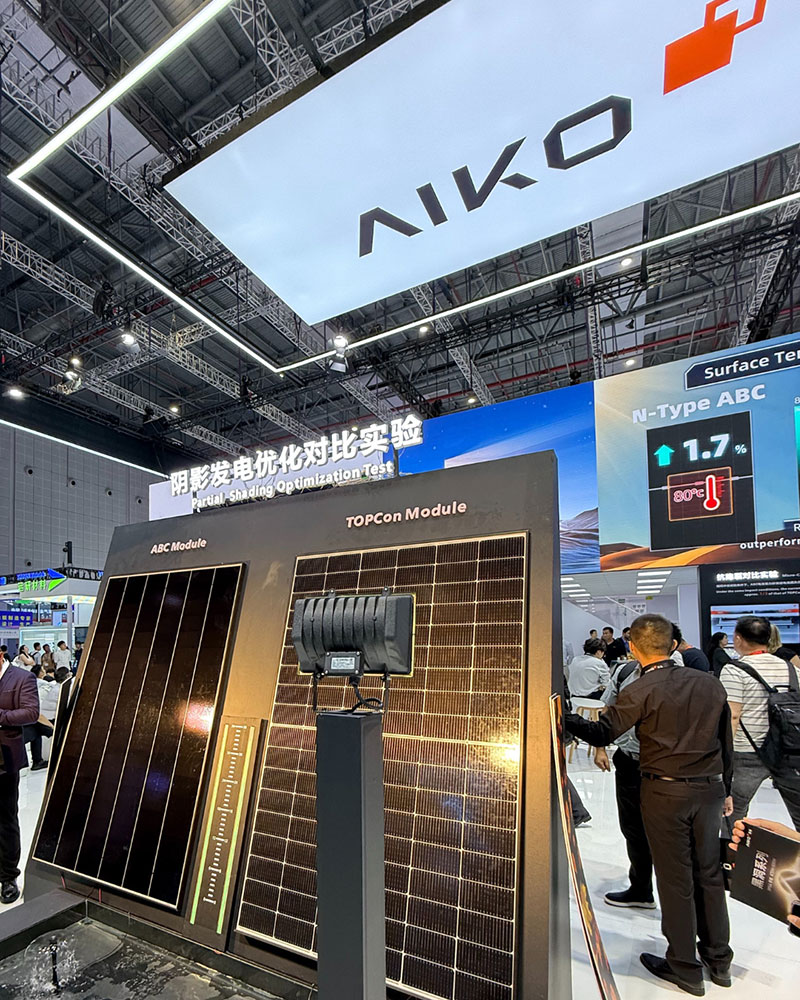
In the video above,  Aiko’s revolutionary partial shading optimisation improves yields in less optimal conditions, such as obstruction, compared to standard format ‘N-Type TOPCon’ solar panels. For Perth homeowners, the new Aiko Neostar 2P presents an exciting opportunity to embrace a new era of solar efficiency. Its advanced features boost energy production and provide peace of mind, knowing your investment can deliver beyond expectation.

At Perth Solar Warehouse, we’re dedicated to providing top-tier solar solutions. The Aiko Neostar 2P perfectly embodies this ethos, offering a premium product that delivers exceptional value. Stay tuned to our social media channels to witness firsthand how this solar panel redefines solar excellence in 2025.

Highlights:

  • Unmatched Efficiency: Harness ABC N-type technology for maximum energy production from an area.
  • Superior Durability: Leading durability specifications ensure years of reliable performance.
  • Elegant Aesthetics: Streamlined black-frame, busbar free design complements any rooftop.
  • Industry-Leading Warranties: Enjoy peace of mind with Aiko’s comprehensive 25-30 year guarantee and Perth Solar Warehouse’s local longevity.

Embrace the future of solar with the Aiko Neostar 2P, now available at Perth Solar Warehouse in the improved maximum system size multiplying 470W format. We’re excited to help you embark on your solar journey with confidence matched with high-end performance.

Aiko Certified Installer. Receive a hassle-free express quote from Perth Solar Warehouse.

Aiko Neostar 2P specifications

Now available to order within a Perth Solar Warehouse solar package is the 470W version of the Aiko Neostar 2P. The most efficient residential solar panel on release at 23.6%, the 470W variant is as close to the ideal maximum system size multiplier (without batteries) currently available in Australia. It’s a powerhouse of efficiency and durability, packed with energy yield-improving features to maximise your solar energy harvest:

Electrical Characteristics (STC):

  • Maximum Power (Pmax): 470W
  • Open Circuit Voltage (Voc): 40.89 V
  • Short Circuit Current (Isc): 14.61 A
  • Maximum Power Voltage (Vmp): 33.90 V
  • Maximum Power Current (Imp): 13.87 A
  • Module Efficiency: 23.6%
  • Power Tolerance: 0~+3%

Mechanical Specifications:

  • Dimensions: 1757 mm x 1134 mm x 30 mm
  • Weight: 21.5 kg
  • Cell Type: N-Type ABC
  • Number of Cells: 108 (6×18)
  • Frame: Anodized aluminium, Black
  • Front Cover: 3.2 mm tempered glass
  • Connector: MC4-Evo2
  • Cable: 4mm² (IEC) / 12AWG (UL), 1200mm

Temperature Ratings & Coefficients:

  • Operating Temperature: -40°C to +85°C
  • Temperature Coefficient of Pmax: -0.26%/°C
  • Temperature Coefficient of Voc: -0.22%/°C
  • Temperature Coefficient of Isc: +0.05%/°C
  • NOCT (Nominal Operating Cell Temperature): 45±2°C


Warranties:

  • Product Warranty: 25 years
  • Performance Warranty: 30-year linear

Warranty download

Additional Features:

  • High-Temperature Restriction: Reduces fire risk
  • Partial Shading Optimisation: Maintains performance even with partial shade
  • Micro-crack Resistance: Enhances durability
  • No Front Grid Design: Sleek aesthetics
  • Better Temperature Coefficient: Improved performance in hot climates

Aiko Neostar 2P datasheet

The stand-out specifications of the Akio Neostar 2P are the [residential] common format dimensions (1757 mm x 1134) and power output (470W). Achieved through an improved module ABC N-Type architecture which boasts an incredible 23.6% module efficiency. The more proportionate sub 22 kg (Neostar 2P—21.5 kg) weight class is ideal for installer manhandling and improved residential structural integrity with less concentrated weight compared to similar power class solar panels of increased weight.

Efficiency is one thing in standard test conditions, but temperature coefficients better assist performance guidance for each degree above 25°C cell temperature. The Aiko Neostar 2P is of an elite calibre at -0.26%/°C (lower the better).

Beyond enhanced aesthetics, these specifications highlight the Aiko Neostar 2P’s cutting-edge technology and performance, making it an excellent choice for Perth homeowners seeking a high-efficiency, reliable solar panel by a world-class brand.

Review: Tesla Powerwall 3 breaks new ground with redesign

White Tesla Powerwall 3 Installed on a black garage wall with cupboards to the left for Perth Solar Warehouse's Tesla Powerwall 3 review

Tesla’s promise of energy independence has always been alluring, but with the Powerwall 3, it feels tantalisingly within reach. This sleek, wall-mounted battery isn’t just an upgrade; it’s a potential game-changer for homeowners ready to take control of their energy consumption and slash those electricity bills.

Contents

Key points

Tesla has a way of resonating with a large portion of the population through design. It seems like there is an almost unspoken concept within their product suite for the homeowner with few options: four cars, one home battery, and one EV charger—a super refined product suite considering the brand’s market capitalisation. Yet all product options fulfil or exceed the expectations of a large demographic of users. 

From the outside looking in, the motive is to “Appeal to the majority of users with broad design appeal. The minority will work itself out.” And that is what Tesla Powerwall 3 is. The energy storage device that ‘most’ users need to sustain energy independence effectively.

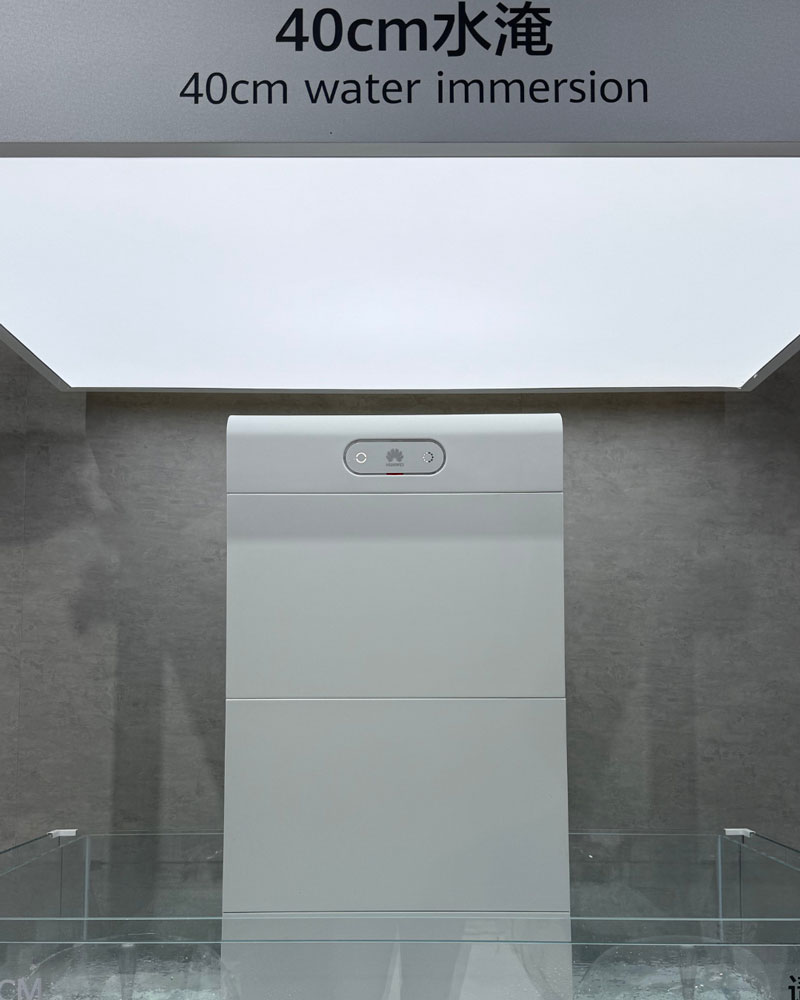
Video: Tesla displays Powerwall 3 in a fish tank to prove the operational characteristics during an ingress scenario.

Which to consider?

Three output versions of Tesla Powerwall 3 exist in Australia to better accommodate regional limitations. You can select from 5, 10, or 11.5 kW power output options with the same 13.5 kW storage capacity. It depends on what the DNSP (Distributed Network Service Provider) will allow you to connect to the electricity grid.

All options are virtually the same unit, factory programmed to a nominated output. Therefore, inside all Tesla Powerwall 3 systems, 3 x MPPT solar input is permitted with up to 20 kW solar capacity! This is HUGE. Single-phase homes with as low as 5kW inverter capacity can now accommodate up to 20 kW of solar panels, generating a broader and more consistent energy yield if the available rooftop surface area exists. 

Perth and Bunbury Region Western Australia.

Consider only the 5kW output version of Tesla Powerwall 3. Restrictions exist on the South West Interconnected System (SWIS) operated by Western Power for embedded supplies. Unlike most major capital cities in Australia, embedded generation systems on the Western Power network have a 5kW single-phase limit. Export limiting isn’t an option for single-phase power supplies, while three-phase embedded generation systems are permitted to export limit energy supply to the grid.

Model
Output (AC)
Inverter
Additional Battery compatibility
Download
Tesla Powewall-3 by Perth Solar Warehouse
TPW3 (single-phase)
5, 10 kW
Solar & Battery
TPW3 multiples
Coming

Powerwall 3: A single-phase solar and battery inverter inside, promoting an all-in-one minimalist high-power-density energy solution. The 3 x DC solar input and internal DC battery (hybrid) to AC grid-tie output is compatible with multiples of AC-coupled Telsa Powerwall 3 variants. In most instances, Tesla Powerwall 3 base quotations from a reputable installer include a Tesla Gateway.

Tesla Premium Certified. Get your copy of the latest Perth Solar Warehouse catalogue.

The Tesla energy ecosystem

Tesla defined the modern home ‘energy ecosystem’ that we know today. It is an all-encompassing suite of energy products communicating together to improve user outcomes. An ongoing investment in software engineering makes Tesla Powerwall 3 stand out among those who compete and flaunt the now-everyday term. This future-focused investment paves the way for an energy suite of products providing actionable insights through an all-in-one platform: the Tesla App.

Tesla App showcased on two mobile phone displays to illustrate the advanced features within the Tesla Energy ecosystem. Perth Solar Warehouse is Perth local Tesla Premium Certified Installer.

Image: The Tesla App provides a superior user experience through high-level software engineering.

An interesting aspect of Tesla’s Powerwall 3’s energy ecosystem is the ability to achieve deep customisation from a minimalist product suite. Previously, manufacturers would double down on your ‘brand’ investment to achieve an energy ecosystem result through an arduous task of producing more technology encased in different boxes. Then label it with a fun name to make you feel better about spending an extra $1000 to $2000+. More of an afterthought, the expanded ecosystem device could have been included in the original design and define market empowerment.

Some in manufacturing may call Tesla’s energy ecosystem poor business compared to the previous era of sustainable energy devices. Still, it defines itself to broad appeal through a minimalist yet comprehensive energy solution. Powerwall 3 is remotely upgradeable through firmware updates towards advanced features and functions.

Model
Attribute
Advantages
Download
Gateway
Energy monitoring & signalling. Backup power and load control
View energy import and export from the point of supply within Tesla App. Provides surplus energy signalling/control to ecosystem devices. Manage power distribution under normal operation and during blackout scenario’s
Datasheet
Tesla Powewall-3 by Perth Solar Warehouse
Battery
5 or 10 kW AC coupled energy storage. 13.5 kWh modular options.
Store excess solar energy for later use. Provide blackout protection when installing additional circuitry and Gateway.
Datasheet
Tesla EV Charger
Electric vehicle charging. 7/11 kW
Charge your electric vehicle standard. Or solar optimised, charge your electric vehicle with excess solar energy without exporting to the grid (Powerwall 3 required).
Datasheet
Tesla App
Real-time & historical energy profiling
Web app for visualisation to full profile energy utilisation insight. Management and control of connected devices.
Datasheet

Gateway: Tesla’s energy Gateway is where the intelligence of the Tesla Energy ecosystem comes together. It is the central hub required for premises load control and tracking, the communication gateway to the connected world for virtual real-time monitoring of your energy independence, and a device needed to operate Tesla Powerwall 3.

Powerwall 3: Most people need a minimum of 13.5 kWh of energy storage to effectively offset peak-period loads, which is precisely why Tesla didn’t alter the energy density between the Powerwall 2 and Powerwall 3 models. What they did change, though, was the ability to input up to 3 independent solar arrays into the battery system, totalling up to 20 kW input. There is no need for an additional solar inverter on single-phase power supplies. Available in two power output models in Australia: 5 or 10 kW

Wall Connector: Tesla’s electric vehicle fast charger is beautifully versatile. The one model accommodates single [7kW] and three-phase [11kW] power supplies and has a relative 7 kW single phase to 11 kW 3 phase maximum charge rate. Your property’s power supply will most often determine the electric vehicle charging configuration.

Tesla Energy App: This is one of the more advanced user applications available. Tesla invests significantly in software engineering for the energy ecosystem experience. One should expect a consistently evolving, superior energy management portal for vehicles, charging, storage, and the generation of Tesla devices. Expectedly, the Tesla app is one of the best available in this rapidly evolving space.

Perth’s leading battery installers. Ensure a quote by a proven and local Tesla partner. 

Powerwall 3 warranty

Accompanied by one of the more straightforward warranties to discern, the Tesla Powerwall 3 is built for a minimum of 10 years of energy security guaranteed. However, the poignant questions in any manufacturer guarantee surround exclusions over the period.

The great news is that Powerwall 3 and all associated components for operation, such as the Gateway, come with a 10-year Tesla product integrity guarantee. The battery pack’s performance indicates a storage capacity degradation of no greater than 30% by year 10. Powerwall 3 has an outstanding warranty compared to most competing batteries, which may discount the associated components or internal inverter warranty.

Covered Product
Covered Part*
Warranty Period
Powerwall 3
Battery
10 years
Accessories
Tesla Energy Gateway
10 years

We’ve seen this exclusion with most modern home battery manufacturers, and it’s there for good reason, so it’s vital to adhere to the 10-year warranty period.

Important: 

Tesla Powerwall 3 comes with a warranty, which depends on the connection of the Powerwall 3 to the Internet.

To secure the full 10-year warranty for Powerwall 3, it must be reliably connected to the Internet to allow remote firmware upgrades from Tesla. If an Internet connection is not established or is interrupted for an extended period, and Tesla is unable to contact you, the warranty may be limited to 4 years.

For more information, refer to the Tesla Powerwall Warranty for your region at tesla.com/support/energy/powerwall/documents.

Review the attached warranty download for the complete list of exclusions, warranty definitions, warranty extension options, the warranty claims process, and your Rights beyond manufacturer guarantees.

Warranty Download

Where are they made

For those seeking more geographically diverse manufacturing origins, Tesla Powerwall 3 models received in Australia are ‘Made in the USA’ from the Tesla Gigafactory in the aptly named ‘Sparks’ Nevada. That said, no matter which global Gigafactory broader Tesla products hail from, a remarkable script exists, better aligning with a global target to lower the CO2 footprint within the distribution networks. Robotic manufacturing from these facilities ensures a precision universal standard, regardless of geographic origin.

What do they cost

Energy storage prices evaluated at a cost per kWh level better normalise how much you spend on energy storage from any battery. What is interesting is Powerwall 3’s position on the price per kWh spectrum for the features compared to market alternatives. Tesla Powerwall 3 offers one of the most competitive storage values per kWh, including the advanced load control mechanism of Tesla Gateway.

Adding energy density in ‘Expansion’ modules when available will further assist lower the cost per kWh of an expanded Powerwall 3 system due to the absence of negligible additions for improved energy density.

Model
Useable Storage kWh
Approx.
Cost p/kWh1
PSW Price
5kW Tesla Powerwall 3
(inc. gateway)
13.5
$1185
Quote
10kW Tesla Powerwall 3
(inc. gateway)
13.5
$1185
n/a

1. Approximate cost per kWh installed, based on values relevant within 30 days of the article post date. 

The above-listed prices are general only. Ensure our best Tesla Powerwall 3 prices: Get your copy of the latest Perth Solar Warehouse catalogue with variable size options.

Final chance. Your copy of the latest Perth Solar Warehouse catalogue. 

Recommended Pairing Options

Tesla Powerwall 3 simplifies yet expands the home energy ecosystem. However, with Tesla solar panels absent in Australia, the next question is which solar panels you should choose to complement the Tesla Powerwall 3. We’ve done the research and believe four module options appeal to a broad range of shoppers based on leading specifications, brand reputation, local assurance and value for the technology inside.

Risen Solar Panels Perth Solar Warehouse

Value: Risen Energy has a reputation in Australia as a preferred solar panel brand incorporated within utility-scale projects such as the Merredin solar farm. Compined with leading specifications it’s a hard solar panel to ignore with an appealing cost.

Review: Risen solar panels: 5 things you need to know before investing

$$

Jinko Neo Satin all-black solar panel render for solar panels by Perth Solar Warehouse

N-Type module: More than a new era n-type module, the Jinko Tiger Neo combines superior durability and performance for assured energy investment. Jinko reins as one of Australia’s favourite solar panel brands with over 1,000,000 Jinko Tiger Neo 440W n-type solar panels shipped (Aug 2023).

Review: Which Jinko Solar panels should you consider?

$$$

Aiko Solar Panel, all-black, NeoStar 1S, no background

Most innovative: Aiko Energy has developed one of the most efficient solar panels commercially available. The Aiko Neostar range is a residential solar module incorporating an InterSolar Award-winning (2023) ABC n-type architecture that complements Tesla’s advanced ecosystem in the absence of Tesla solar panels in Australia.

Review: AIKO set to revolutionise the Australian market 

$$$$

Trusted: ‘Better, not bigger’ is the REC phrase to catch bloated panels marketed as superior off-guard, and we couldn’t agree more. Just because a solar panel has a higher power class doesn’t mean it’s better. Precisely why many researched investors highly value the multi-award-winning brand for innovation. Built in Singapore. 

Review: Are the benefits of REC Solar panels worth the cost?

$$$$$

Is Tesla Powerwall 3 worth it?

Single-phase power supplies: Yes, supposing self-sustainable energy foresight validates the cost per kWh energy storage value. Powerwall 3 is one of the lowest in terms of cost per kWh plus added function. Features such as Storm Watch and Blackout Protection have the potential to support an entire home power supply in the event of a grid failure and improve overall value from energy savings alone. Plus, for the power-hungry, accomodate up a 20 kW combined solar input through three independent trackers.

Three-phase power supplies: It depends on your scenario (and we hate saying that!). In many instances, without a native 3-phase connection, Tesla Powerwall 3 will face limitations imposed by the local DNSP (Distributed Network Service Provider). The good news is that if there is an existing 3-phase solar inverter, Tesla Powerwall 3 can operate an AC-coupled battery with that solar energy system using one phase and offset the alternative two phases (in energy savings) through net metering, which is similar to most Australian regions.

Is the Tesla Powerwall 3 worth it for you?

The good news is that Powerwall 3s offer added value beyond stored solar savings and redefined simplicity. It will come at a higher price in Australia than Powerwall 2, meeting expectations. Released with an indicator of ‘more function inside’, the remaining aspects of the build subject to market and supply chain. There almost had to be a surcharge in Australia, where installer margins are some of the lowest internationally through heavy competition, which makes absorbing cost changes nearly impossible.

For many, the barrier exists with an undersold evaluation of their energy storage requirements. At 13.5 kWh useable storage capacity, the Tesla Powerwall 3 is another energy storage device at a good value per kWh compared to any home battery on the market. As opposed to making a lower adoption hurdle in upfront cost, Tesla allocates the ideal entry-level energy storage capacity for most home users seeking practical energy independence in the most simplified format. However, its unique functions and features through user experience [with the broader energy ecosystem] make it the home energy solution that raises the bar, setting a new benchmark in user standards in home energy solutions.

Single-phase power supply suitability: 5/5 stars

Three phase power supply suitability 4.5/5 stars