For Australian homeowners considering solar options, Tindo Solar is a distinctly local choice. As the only mass-market solar panel manufacturer in the country, Tindo panels provide features that many imported brands lack: engineering specifically designed for Australian conditions, rigorous domestic quality control, and warranty support that is fully managed onshore.
This guide offers a comprehensive overview of Tindo’s current solar panel lineup, including insights on performance, warranties, pricing, and a comparison to mainstream brands. Whether you are new to solar energy or looking to compare options for your home, this overview aims to give you the clarity you need to make an informed decision.
Contents
Key points
- Australian-made for Australian conditions: Tindo panels are locally manufactured in Adelaide and engineered specifically to withstand high heat, strong UV exposure and harsh weather, offering long-term reliability in Australian climates.
- High-quality N-type technology: The Walara series uses modern N-type TOPCon monocrystalline cells with strong efficiency, slower long-term degradation and robust construction, ensuring consistent performance over 25+ years.
- Stronger warranty and easier support: With a 25-year product and performance warranty handled directly within Australia, Tindo offers easier, more reliable after-sales support than many imported brands.
- Higher upfront cost, stronger long-term value: While more expensive per watt than many global brands, Tindo’s superior build quality, domestic quality control and local backing provide better lifetime value and peace of mind.
When we say Australian-made, many homeowners appreciate that warranty support is provided by an Australian company with a physical presence, rather than relying on offshore distributors.
Tindo Solar panels are promoted to be designed for the harsh Australian climate. Such a claim would enable them to perform reliably under high temperatures, UV exposure, and variable weather conditions, further enhancing their long-term durability. Verified specifications can often assist in this regard, and we will compare these figures against those of international mainstream brands below.
Which to consider
Tindo’s latest residential product range is the Walara series, which features two high-performance monocrystalline N-type TOPCon models: the Walara 440 W G4P and the Walara 475 W Full-Black Edition. Both models utilise advanced cell technology designed to maximise efficiency while ensuring stability in extreme heat conditions.
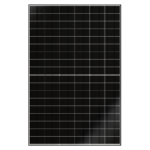
1. Tindo Walara G4P (440 W): The Walara 440 W is designed to fit comfortably on standard residential rooftops, with dimensions of approximately 1722 × 1133 × 35 mm and a weight of around 21 kg.
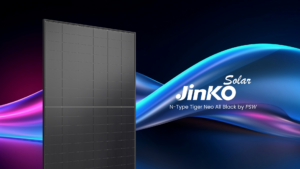
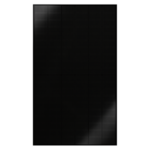
2. Tindo Walara G4P-BL (475 W): The larger 475 W Full-Black panel, perfect for homeowners looking for a sleek all-black design, measures approximately 1910 × 1133 × 35 mm and weighs around 23.5 kg.
The N-type TOPCon cell technology used in these modules offers superior resistance to long-term degradation compared to older P-type cells, which means the panels are less likely to lose efficiency over time. Additionally, each panel features a 16-busbar design, which reduces internal resistance and enhances energy capture during variable light conditions—an essential factor for rooftops that may experience partial shading or inconsistent orientation.
Performance, Heat Behaviour and Longevity
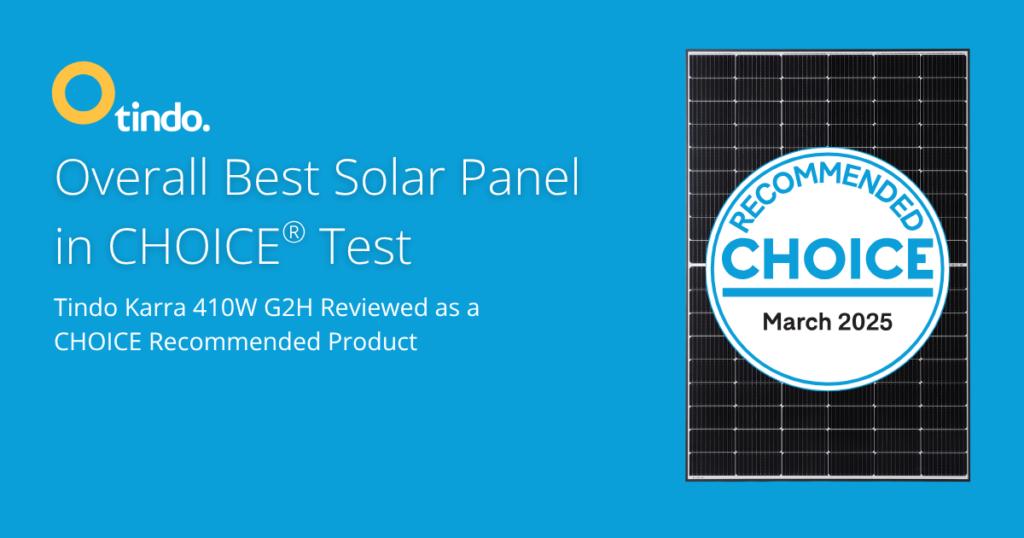
Due to the extremely high rooftop temperatures in Australia, solar panels must perform effectively in hot environments. Tindo’s Walara solar panels can safely operate at temperatures up to 85 °C and have a temperature coefficient of approximately -0.30% for every degree above the standard test temperature of 25 °C. This rating means that for each degree the panel temperature exceeds 25 °C, its output decreases by only 0.30%. While all solar panels experience efficiency loss in high temperatures, Tindo’s panels are specifically designed to compete with leading global brands in terms of high performance, under standard test conditions. CHOICE proven, rest assured knowing that Australia’s home-grown solar panel brand is engineered for long-term stability in hot, high-UV non-standard test conditions.
A typical 6.6 kW residential solar system using Tindo panels can produce approximately 20 kWh of energy per day during winter and up to 40 kWh per day during summer (in Perth, Western Australia), depending on various installation factors. Tindo’s Walara panels are designed to maintain high output over the decades due to the slower degradation rates associated with N-type technology. Tindo guarantees that after 25 years, the panels will still produce at least 87.4% of their original rated power. This degradation rate, averaging less than 0.5% annually, places Tindo panels firmly within the modern high-performance category.
What is the warranty
One of Tindo’s most significant benefits is its 25-year product warranty, which covers workmanship, materials and defects. This is paired with a 25-year performance warranty guaranteeing minimum power output over time. In addition to meeting global warranty standards, Tindo’s local presence enables a faster and more transparent claims process for Australian customers. Because the company is based in Adelaide, homeowners can access support directly, rather than through importers or third-party distributors overseas.
- Warranted maximum power output degradation within a nominated period at Standard Test Conditions.
- Annual warranted maximum power output degradation at Standard Test Conditions beyond year 1 for the remaining performance warranty period.
Tindo reports extremely low defect rates, crediting its strict “zero-defect” manufacturing philosophy. Each panel undergoes inspection and electrical testing before leaving the factory. It’s worth noting that any micro-inverters or optimisers installed alongside Tindo panels carry their own manufacturer’s warranty, which may be separate from the panel warranty. For this reason, it’s crucial to ensure your installer clearly outlines which components are covered by which manufacturer and for how long.
Where are they made
Adelaide (Mawson Lakes, Technology Park), South Australia. A wholly and independently owned facility dedicated to growing Australia’s opportunity as a proven sustainable energy manufacturer. A virtual onshore company, Knighthood in Australia, Tindo Solar, is distinguished as an ACEPV (Australian Centre of Excellence in Photovoltaics).
What do they cost
As a high-quality Australian-manufactured product, Tindo panels generally fall into the mid-to-upper pricing category. A small residential system of around 6.6 kW is often priced between $5,000 and $6,000 plus inverter or battery cost, roof complexity and installation factors. Many homeowners consider the additional cost worthwhile for the sake of local support, superior build quality and long-term performance.
1. Average cost per kW installed (after STC value deducted as a point-of-sale discount), excluding inverter or battery cost compatible with the Example System Size, and based on values relevant within 30 days of the article post date.
Ensure these Tindo Solar panels and their listed prices are our best. Get your copy of the latest Perth Solar Warehouse catalogue.
As the most common small-scale system size (residential), a 6.6 kW system is an example. Considering all inverter types, the average cost is divided to provide an Average Cost per kW. The Average Cost per kW can be multiplied by any nominated system size for general system cost guidance. This content is not a substitute for a quoted price.
Quick links: Common alternative system sizes (with prices): 3 kW, 10 kW, 13 kW or 19 kW.
Hassle-free solar. Locally proven, Perth Solar Warehouse. Google & SolarQuotes 4.9/5
Recommended pairing options

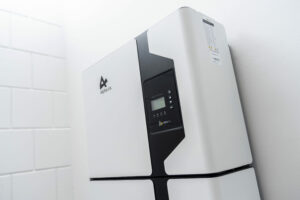
Standard Inverter: Goodwe DNS-G3 or SDT-G2. It’s hard to overlook Goodwe when considering inverters. While it may fall on the more affordable end of the spectrum, it delivers reliable performance. Their software is excellent, they provide outstanding local support, and they have a solid reputation in the industry. Goodwe manufactures solar inverters that many people appreciate, and their growing market share reflects this.
Review: How good is a Goodwe inverter for your solar project
$$

Hybrid Inverter: Sigenergy’s SigenStor is poised to be one of the most disruptive sustainable energy solutions from 2025. If you’re not quite ready for batteries yet, consider starting your new Tindo Solar system with only the Sigenergy Energy Controller/hybrid inverter. It offers both single-phase and three-phase output options, along with industry-leading AI-driven energy management software, and bidirectional EV charging options. One of the best value options for all-in-one, modular storage per kWh.
Review: Sigenergy’s ‘SigenStor’ is a game-changer for Australia
$$$

Hybrid inverter: With a 20% share of the Australian inverter market, Fronius has established a strong level of trust among consumers. Over the past decade, the company has built a reputation for producing reliable solar inverters, showcasing European innovation in energy ecosystems, particularly with the recent launch of the Fronius GEN24 range.
Review: Is a Fronius inverter worth the extra expense
$$$$
Who Tindo Solar panels are best suited for
Tindo Solar is an excellent fit for homeowners who value Australian-made products, prefer local warranty support, and are willing to invest in superior long-term durability rather than chasing the lowest upfront price. The panels are ideal for homes exposed to harsh weather or high heat and for buyers who want a clean, integrated aesthetic without sacrificing performance. On the other hand, homeowners with minimal budgets, minimal roof space requiring ultra-high-wattage panels, or those prioritising global premium branding may find imported panels a better match for their needs.
For most Australian homes, and particularly those in Western Australia, seeking reliable performance in hot, sun-intense conditions, Tindo Solar’s Walara 440 W and 475 W panels offer an appealing balance of efficiency, longevity, and locally backed support. They are engineered for local weather extremes, inspected under rigorous quality control processes and supported by one of the strongest warranties available to Australian homeowners. If long-term value, reliability and local presence matter to you, Tindo stands out as one of the most dependable residential solar panel options available in 2025.