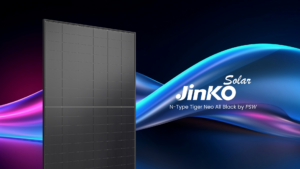
If you’ve been comparing solar panels online, you’ve probably noticed some panels advertised at 475W, while others are advertised at 510W+. There are even some pushing past 700W. It’s natural to think: more watts = better panel. But here’s the thing: that’s not how solar works.
Higher-wattage panels aren’t more advanced. They’re just physically larger. And for most Australian homes, bigger isn’t better; it’s a potential hindrance.
Contents
The likely reason a panel has more power
Think of it like a dining table. A table that seats eight isn’t made of better timber than one that seats four, it’s just longer. Solar panels work the same way. Manufacturers add extra rows of solar cells to increase a panel’s power output. The cells themselves are essentially the same quality. The panel is simply bigger.
A 510W panel and a 475W panel from the same brand, with the same efficiency rating, will cover almost identical roof space to generate the same total system output. The higher-wattage panel just does it in fewer, larger pieces. A counterproductive specification for man-handling in residential scenarios and variable rooftop areas.
One exception: The Aiko Neostar 3P, 500W solar panel breaks the 25% efficiency mark, making it the only solar panel brand in Australia to achieve significantly higher power from a standard residential solar panel format (~1750 x 1100).
Illustrative video by LONGi Solar panel sizing dimension x intended purpose
So what's the catch with bigger panels?
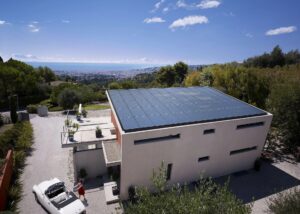
Australian residential rooftops aren’t designed for large commercial solar panels. Most homes have angled hips, valleys, chimneys, and awkward corners that limit usable space. Bigger panels create real practical problems:
- They're harder to fit around obstacles. A larger panel can't squeeze into a gap that a smaller panel would fill neatly, meaning you may end up with wasted roof space or fewer panels than you need.
- They're heavier. A 510W+ panel can weigh 24-25kg compared to 21–22kg for a standard residential panel. That concentrated weight puts more stress on your roof structure over time.
- They catch more wind. Solar panels act like sails. A larger surface area increases wind loading at each fixing point, which matters on Perth's coastal and elevated properties.
- They're harder to replace. If a panel ever needs replacing years down the track, less common larger formats are harder to source and match (dimensions, colour and format matching, etc).
Applications big panels are designed for
Large-format panels (510W+) are engineered for commercial and industrial rooftops, warehouses, factories, and large flat roofs where weight distribution is reinforced, and there’s plenty of unobstructed space. Fewer large panels mean faster installation across a large roof area, reducing labour costs at scale.
That’s a genuine advantage when you’re covering 2,000 square metres of factory roofing. It’s not an advantage on a three-bedroom home in Baldivis.
Numbers that matters
Instead of comparing individual panel wattage, focus on your total system output, measured in kilowatts (kW). That’s what determines how much electricity your home actually generates.
A 10kW system will produce roughly the same amount of power whether it uses 22 panels at 475W or 20 panels at 510W. The meaningful difference is how well those panels fit your roof, not which number is printed on the datasheet.
Ask your installer: “What total system size will fit my roof, and what will it generate annually?” — not “What wattage are the panels?”
Cost comparison
Here’s something most people don’t realise: there is typically no price difference. Solar panels are priced by the watt at the wholesale level. A 510W panel costs almost exactly the same as a 475W panel does watt-for-watt, forming a comparative system cost. You’re not getting a better deal or a premium product by choosing a higher-wattage panel. You’re simply choosing a different size.
If a salesperson is pushing high-wattage panels [other than Aiko’s Neostar 3P] as a selling point, that’s worth questioning.
What should you look for in a solar panel?
For a typical Perth home, the sweet spot for a residential panel in 2026 sits around 475W at 23.8% efficiency (peak comparison, Aiko Neostar 3P 500W, 25% module efficiency). Panels in this range have:
- Mainstream electrical characteristics that work with a wide range of inverters (including future upgrades)
- Physical dimensions suited to residential roof layouts
- Better availability if replacements are ever needed
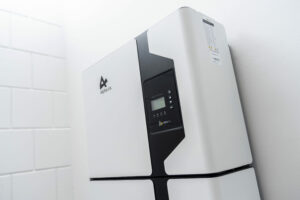
- Proven compatibility with battery storage systems
Efficiency (the percentage of sunlight converted to electricity) matters far more than wattage. Two panels with the same efficiency rating will perform identically per square metre, regardless of their wattage.
The bottom line
Don’t shop for solar panels the way you’d shop for a drill or a speaker, where higher power usually means better performance. Solar panels are part of a system, and that system needs to fit your roof.
The best solar panel for your home is one that:
- Fits your available roof space efficiently
- Matches your inverter and battery technology
- Comes from a reputable manufacturer with strong warranty support
- Contributes to the right total system size for your energy needs
Focus on your system output. Everything else is just marketing.