A good home battery in Perth is no longer just “kWh on a wall”. In 2026, battery value is mostly decided by (1) how well the system shifts energy away from Synergy’s expensive late-afternoon/evening period, (2) how cleanly it integrates backup power for outages, and (3) whether it can grow with your household—EV charging, added storage, bigger solar, or tariff optimisation.
Quick insight
- Modular storage: 5.2kWh usable (5kWh class) or 7.8kWh usable (8kWh class) per module, using LFP chemistry.
- Scales cleanly: the controller supports 1–6 battery modules, so you can stage capacity as budgets and usage change.
- Backup power is an option, not a compromise: add the Sigen Gateway for whole-home or partial-home backup (site-dependent design).
- EV integration is genuinely different: optional EV DC charging modules up to 12.5kW or 25kW, including bi-directional V2X capability (subject to EV compatibility and local rules).
Sigenergy’s SigenStor platform remains one of the more compelling “ecosystem” entrants because it was built as a modular, DC-coupled architecture from day one: an energy controller (hybrid inverter) plus stackable LFP battery modules, with optional gateway (backup) and EV DC charging.
Contents
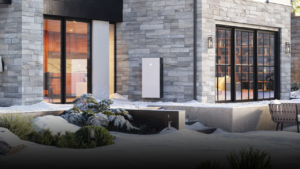
A reimagined concept. Sigenergy SigenStor is transforming home energy management with a modular approach. Central to this system is the Sigen Energy Controller, a hybrid inverter that efficiently converts solar and battery DC power for household or grid use, featuring multiple MPPT inputs for optimal efficiency. Homeowners can customize their energy storage using stackable Sigen Battery modules available in 5.2kWh or 7.8kWh capacities.
Additional components like the Sigen Gateway provide blackout functionality and backup load control, ensuring continuous power during outages. For EV owners, the Sigen EV DC charging module offers fast charging and bi-directional V2X technology. This system allows for a tailored energy setup that can be easily expanded to meet growing needs, all without major renovations.
Which to consider?
Step 1 — Single-phase or three-phase power supply. Most Perth homes are single-phase; larger homes and businesses (big ducted AC, workshops, bigger EV loads) are more often three-phase. Your power supply affects controller selection, backup design, and the amount of instantaneous power the system can supply.
Step 2 — Choose the right foundation (controller power class). From a technical perspective, key controller attributes include PV voltage window, MPPT count, and conversion efficiency, as these influence design flexibility and yield over the long run. For example, the controller supports up to 4 MPPTs and high DC input voltage, which helps when Perth roofs have mixed orientations (east/west splits, partial shading, multiple strings).
Step 3 — Size battery capacity to your “after 3pm” usage. In WA, the economic problem batteries solve is the high cost of electricity in the late afternoon/evening. If most of your consumption happens after 3pm (cooking, AC, pool pumps, EV charging), storage value rises quickly.
A clean sizing rule for most WA households:
-
Scale in 8 kWh of Sigenstor battery modules for the best value per kWh of storage.
-
Balance-of-system costs (gateway, commissioning, switchboard work) don’t scale linearly.
SigenStor makes staged expansion straightforward because the controller supports 1–6 battery modules.
Backup power: what to expect
If blackout protection matters, design it explicitly. The Sigen Gateway is the enabling component for backup operation, and it supports whole-home or partial-home backup depending on site constraints and how circuits are configured. What this means:
- “Whole-home backup” is achievable on some sites, but it’s not automatically smart (you still want to manage large loads like ducted AC).
- “Essential loads backup” (lights, fridge, internet, selected socket outlets, some AC) is often the best value design.
EV charging and V2X
Sigen EV DC charging is one of the platform’s standout differentiators. The module supports up to 12.5kW or 25kW charging and discharging, CCS2 interface, wide operating voltage range, and IP66 protection.
Two important caveats:
- Bi-directional” is not just the charger. Your EV model must support the required V2X behaviour, and manufacturers publish compatibility lists that change over time.
Any export-to-grid behaviours can be subject to local network approvals and program rules. Treat V2X as a capability you plan for—not a guarantee you’ll use day one.
For most Perth homeowners today, the immediate benefit is simpler: faster solar-optimised EV charging that keeps more of your solar on-site instead of pushing it to the grid.
Warranty and long-term ownership
The Sigen Battery and Sigen Energy Controller are covered by a 10-year product warranty, while the EV DC charging module has a shorter warranty period of 3 years. The battery performance warranty includes details on energy retention and throughput.
Additionally, the warranty document emphasises the importance of connectivity, outlining expectations for internet connection and specifying the consequences if the system is disconnected for extended periods. Here’s what’s materially relevant in Sigenergy’s current warranty terms:
Covered Product | Covered Part* | Warranty Period |
|---|---|---|
SigenStor | Sigen Battery | 10 years
|
Sigen Energy Controller | 10 years
| |
Accessories | Sigen Energy Gateway
| 5 years (upgradeable)
|
Sigen Power Sensor | 2 years | |
Sigen Communication Module | 2 years |
Our position at PSW: we size and configure systems so you’re not “using the warranty” often. That means conservative switchboard integration, correct thermal placement, and commissioning discipline—not just selecting a brand.
Video: Sigenergy Gigafactory SigenStor production facility, Shanghai
WA rebates, VPPs, tariffs and ROI examples
WA incentives: meaningful in 2026. The WA Residential Battery Scheme is live and is explicitly structured around VPP participation. It offers Synergy customers up to $1,300 on a 10kWh battery (more in Horizon Power regions), on top of the federal STC discount. Households that qualify through Plenti can also get an income-tested no-interest loan of up to $10,000 over 10 years.
Joining a VPP can create additional value streams (for example, event credits). The VPP agreement is time-limited for an initial 2-year period, then an option to opt out (not a permanent lock-in). Learn more ›
Synergy pricing reality: the “battery window” is late afternoon/evening. On Synergy’s Midday Saver time-of-use plan (effective 1 July 2026 pricing), the peak period is 3pm–9pm with a materially higher usage charge than the super off-peak daytime window.
Illustrative payback mechanics (simplified). Example household: 20kWh/day, with ~10kWh occurring during 3pm–9pm (AC, cooking, pool, EV top-up).
If a battery reliably supplies 8–10kWh into the 3pm–9pm window, the value per kWh is roughly the peak import price avoided (less round-trip losses). On Midday Saver, that peak usage charge is 55.3253c/kWh (from 1 July 2026).
Very rough annualised value for shifting 10kWh/day into peak avoidance:
10kWh/day × $0.553 ≈ $5.53/day
≈ $2,019/year before losses and seasonal variation (then discount for round-trip efficiency, weather, and behavioural reality)
This is why “battery ROI” in Perth is mostly a load-shape conversation. Two households can buy the same battery and see totally different economics depending on whether their usage is daytime-heavy or evening-heavy.
Important: don’t build your ROI model on best-case export assumptions. Batteries win primarily by reducing high-priced imports, not by selling energy back. Any VPP credit upside should be treated as a bonus layer—not the foundation.
Competitive landscape: Where Sigenergy fits
In 2026, Perth’s battery market broadly falls into four groups:
Premium “single box” batteries with strong brand pull
Modular HV/LV stacks paired to hybrid inverters (often very cost-effective per kWh)
Ecosystem-first solutions (battery + monitoring + load control + EV integration)
VPP-aligned offerings optimised for orchestration and grid services
SigenStor’s competitive edge in Perth is that it competes in (2) and (3) at the same time: it’s modular like the best stack systems, but it also offers an integrated pathway to backup and EV DC charging with V2X capability.
If you’re comparing SigenStor to alternatives, the three “apples with apples” checks we recommend are:
True usable kWh and staged expandability (not just nominal capacity).
Backup inclusion and backup design scope (whole-home vs essential loads).
EV roadmap: whether EV integration is bolt-on AC charging or genuinely integrated DC/V2X capable.
If you’re researching a Sigenergy SigenStor battery in Perth, the fastest way to get an accurate answer is a structured assessment:
1. Confirm phase (single vs three-phase) and switchboard constraints
2. Pull interval data (or bill + usage pattern) to quantify your 3pm–9pm demand window
3. Decide whether backup (if required) is essential loads or whole-home
4. Size the first-stage battery (and map your expansion path)
5. Validate eligibility pathways if you’re targeting WA rebates/VPP participation
Perth Solar Warehouse can provide a SigenStor assessment and proposal that’s specific to your roof, tariff, and household load shape—rather than generic “battery brochure math”.