If your power bills have been climbing and it feels like you’re doing everything “right” but still paying more, you’re not alone. The good news is that if you consider adding rooftop solar, Synergy’s solar feed-in tariff can provide a credit on your bill for the electricity you don’t use at home and send back to the grid.
Contents
What Synergy’s “solar feed-in tariff” is
When your solar panels generate more electricity than your home uses, the excess power can flow back to the grid. Synergy tracks that exported electricity and applies a credit to your bill under the Distributed Energy Buyback Scheme (DEBS).
What this means for your bill
The credit helps, but it’s not the main event. Most homeowners save the most money by using more of their solar power at home first (for example, running appliances during the day). The export credit is a helpful extra, more so if you can export during the higher-rate window.
Two time windows, two credit rates
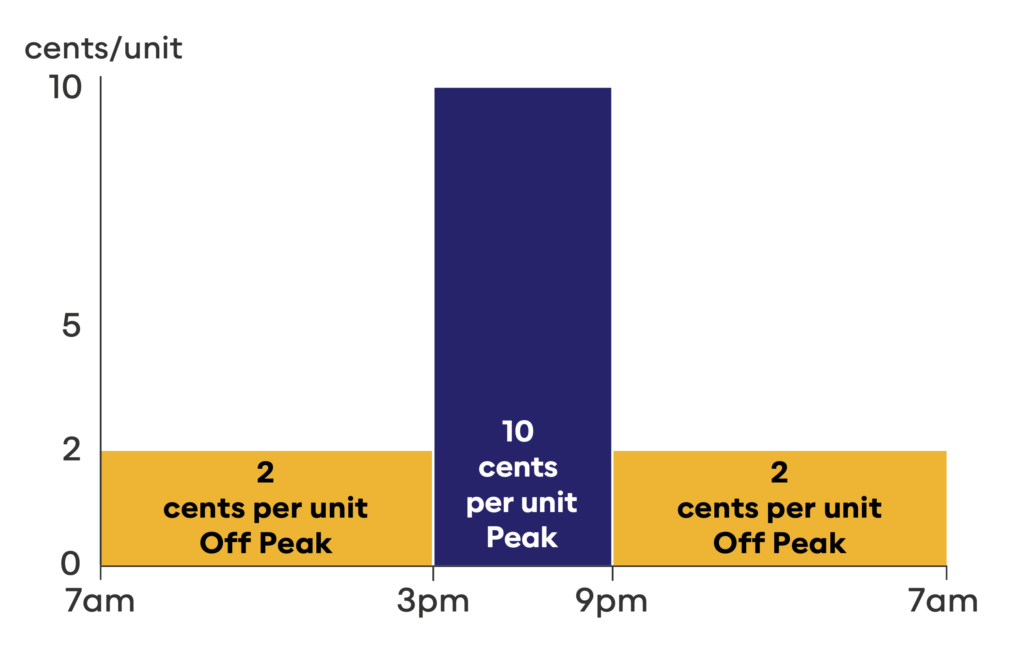
DEBS pays one rate during the late afternoon and evening (when demand is higher), and a lower rate at other times. This can feel frustrating, but it also provides a simple strategy: try to shift some usage into the daytime and let more export occur later in the afternoon when possible.
Price schedule
Updated annually: Synergy DEBS pricing schedule effective 1 July 2025 for South West Interconnected System (SWIS) customers only.
Distributed Energy Buyback Scheme Rate | c/kWh |
|---|---|
Peak – Between 3pm and 9pm | 10 |
Off-Peak – Before 3pm or after 9pm | 2 |
One-off charges
Fortunately, the savings from a solar energy system often offset these initial costs within the first month or two. Before applying for anything, it’s essential to understand the associated costs that will be reflected on your next Synergy bill.
Fees | Cost |
|---|---|
DEBS administration fee | $7.53 (inc GST) per account |
Plus…
Metering costs to switch to DEBS | Cost |
|---|---|
Meter upgrade fee (or) | $108.08 (inc GST) |
Meter reprogram fee | $109.25 (inc GST) |
Possible extra equipment: In limited cases, the network operator may require additional communications equipment at the meter, incurring an extra cost.
Synergy Solar Feed-in Tariff/ DEBS Pricing Schedule: Download ›
Eligibility checklist
Use this checklist to quickly work out whether you’re likely eligible, without wading through pages of fine print. If you tick most boxes, your next step is usually an application (often handled by your installer).
Quick eligibility (most homeowners)
You’re a Synergy customer (generally Perth and much of the south-west).
You’re a residential customer, or you’re an eligible not-for-profit or educational organisation.
Your system size is within the scheme limit (commonly “5 kW or less” for the main device that connects your solar to the home and grid).
You (or your installer) will apply to connect the system and obtain approvals from both Synergy and the network operator (Western Power in most Synergy areas).
You’ll have the right meter in place so exported electricity can be measured correctly.
You can accept the DEBS contract terms when prompted during the process.
If you already have solar and you’re upgrading
If you change your system (for example adding more panels or making other upgrades), you typically need to notify/apply again so the right approvals and metering settings are in place.
If you were on an older buyback arrangement, upgrading may move you onto DEBS rates.
If you have (or want) a battery
Battery exports can be credited under DEBS (the same buyback rates can apply to exported electricity).
Make sure it’s set up correctly by your installer so you stay compliant with local network requirements.

Application steps
The process is simpler than it sounds when broken down. Here are the steps most homeowners follow. Step-by-step: how to get onto Synergy’s DEBS:
- Decide what you’re doing: new solar or an upgrade. If you’re unsure, start by checking your latest bill and any paperwork from your current system.
- Choose an installer (or confirm your plan if you already have one). Ask them upfront: “Will you handle the Synergy and Western Power paperwork for me?” Many installers, such as PSW, do—this alone can remove most of the hassle.
- Submit the required application. You (or your installer) will complete the relevant distributed energy application and engage with both Synergy and the network operator.
- Complete network approval checks. The network operator reviews whether your system can connect under local rules and what settings are required.
- Get metering sorted (if required). Your meter may be upgraded or reprogrammed so exports can be measured correctly. If charges apply, they’re typically added to your next Synergy bill.
- Accept the DEBS terms when prompted. This may happen online during the application process or during a move-in process if you’ve moved into a home with an existing system.
- Check your next bill for the line item. Look for wording that indicates exported electricity credits/buyback payments. If you don’t see it, contact Synergy (or ask your installer to confirm metering and acceptance steps are complete).
Note: Solar installation companies managing your project with an installation target date beyond three months may reserve application submission until within 90 days of the target installation date.
Important: Applying with Synergy and Western Power will add fees to your next Synergy bill.
Frequent questions
Will this actually reduce my power bill?
Using solar power at home first usually leads to the most significant reduction in your electricity bills. While the export credit is valuable, especially if you often send power back to the grid during peak rate times, it’s more of a token credit on top of the savings achieved from self-use.
How much money will I make from exporting electricity?
It depends on how much unused electricity your home exports and when that export occurs. If you’re trying to estimate savings, start simple:
- check how often you’re exporting now (some bills or monitoring apps show it),
- assume some exports occur outside the higher-rate window,
- treat export credits as a “nice extra” rather than the primary driver of payback.
Observation: It is rare to see a DEBS bill credit exceeding $30 for each bimonthly billing cycle.
Is there a limit to how much export credit I can receive?
Yes. DEBS credits apply to the first 50 kWh of exported units per day, per premises. For most homes, this limit is unlikely to be a problem; however, it’s essential to be aware of its existence.