A Fronius home energy system in 2026 is best understood as a connected ecosystem rather than a single product. The inverter still matters, but it’s really the “traffic controller” that coordinates solar generation, household consumption, export limits, optional storage, EV charging, and hot-water diversion, then presents it all in a single monitoring environment (Solar.web).
Quick insight
- Fronius is designed as a “one-system” approach: monitoring, metering, energy control, and now a Fronius battery (Reserva).
- In Western Australia, low daytime buyback rates and export constraints increase the value of self-consumption control (battery, EV, hot water).
- The Smart Meter (your “power sensor”) is the data source that makes the ecosystem intelligible and enables control features.
- Reserva is modular (6.3–15.8 kWh per tower) and built to integrate with Fronius hybrid inverters.
Contents
For West Australian homeowners, that ecosystem concept is now fundamental. Daytime exports are typically paid at low rates under DEBS (commonly 2c/kWh outside the 3–9 pm peak window), so the system that helps you use more of your solar at home, rather than exporting it, tends to deliver the better outcome.
Why the ecosystem matters in WA
WA policy and network settings increasingly reward “use what you generate” rather than “export everything”.
DEBS makes daytime export relatively low value. Synergy’s published DEBS buyback rates from 1 July 2025 are 10c/kWh for 3–9pm peak and 2c/kWh at other times. That puts a premium on shifting consumption into solar hours, or storing solar for evening use.
WA also has additional requirements around inverter capability and export limiting. For example, WA’s Emergency Solar Management information notes that systems at 5 kW or less must be capable of being remotely turned down/off, and systems above 5 kW need export limiting (e.g., 1.5 kW or 5% of inverter capacity, whichever is greater).
The practical takeaway: a Fronius “ecosystem build” (meter + monitoring + controllable loads + storage option) is a direct response to how WA homes are increasingly expected to behave on the grid.
Building blocks of a Fronius home energy system
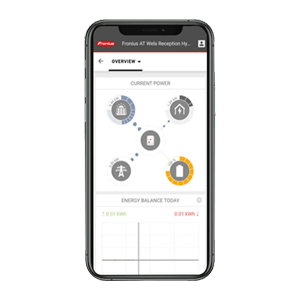
A) Solar.web (system overview). Solar.web is Fronius’s monitoring platform designed for homeowners, providing a comprehensive view of energy yield, consumption, and system status in one convenient location. This platform is essential for achieving better service outcomes, as Fronius offers automatic service notifications and quicker remote fault resolution for compatible devices.
What this means for homeowners is that you can not only monitor how much solar energy is being generated, but also assess whether your household is using that energy effectively. Additionally, potential issues can be identified and addressed earlier.
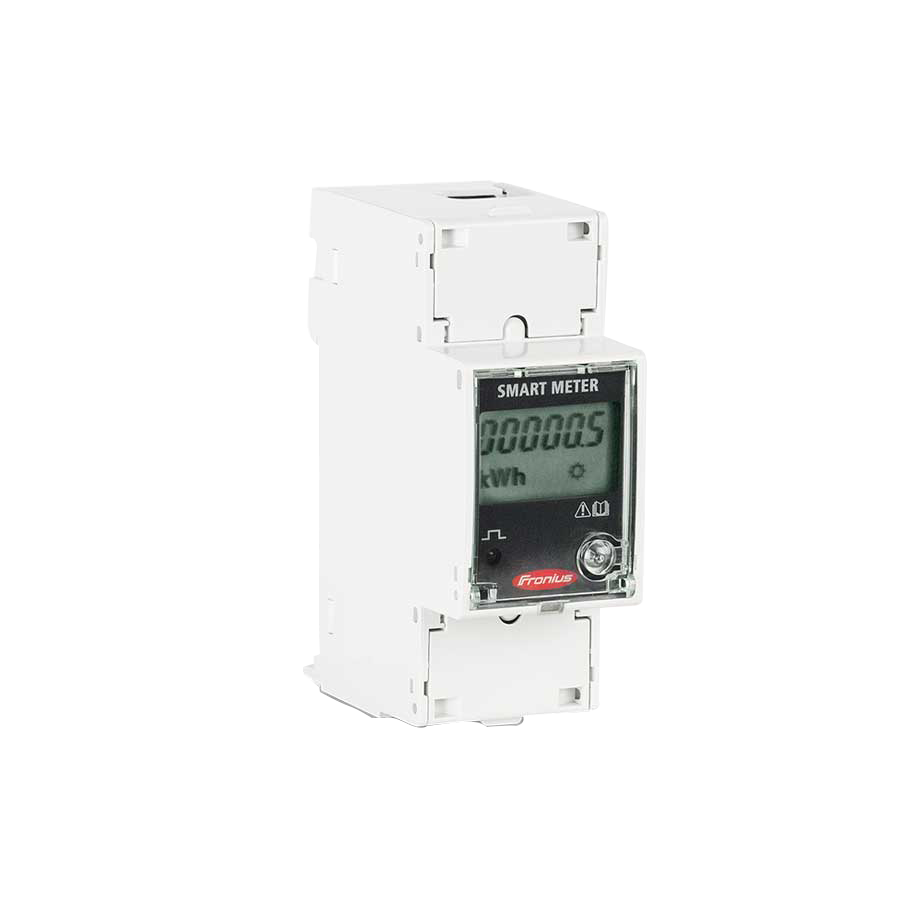
B) Fronius Smart Meter (power sensor). Fronius describes the Smart Meter as a bidirectional meter that optimises self-consumption and records a household load curve. It is not merely an optional component in an ecosystem; rather, it serves as the critical measurement point that informs the system about conditions at the grid connection.
For homeowners, the distinction is significant; instead of simply saying, “I have solar,” they can say, “I can see my import/export data and manage it effectively.”

Illustrative purposes. The Fronius GEN24 inverter is not DC-coupled compatible with a wind turbine.
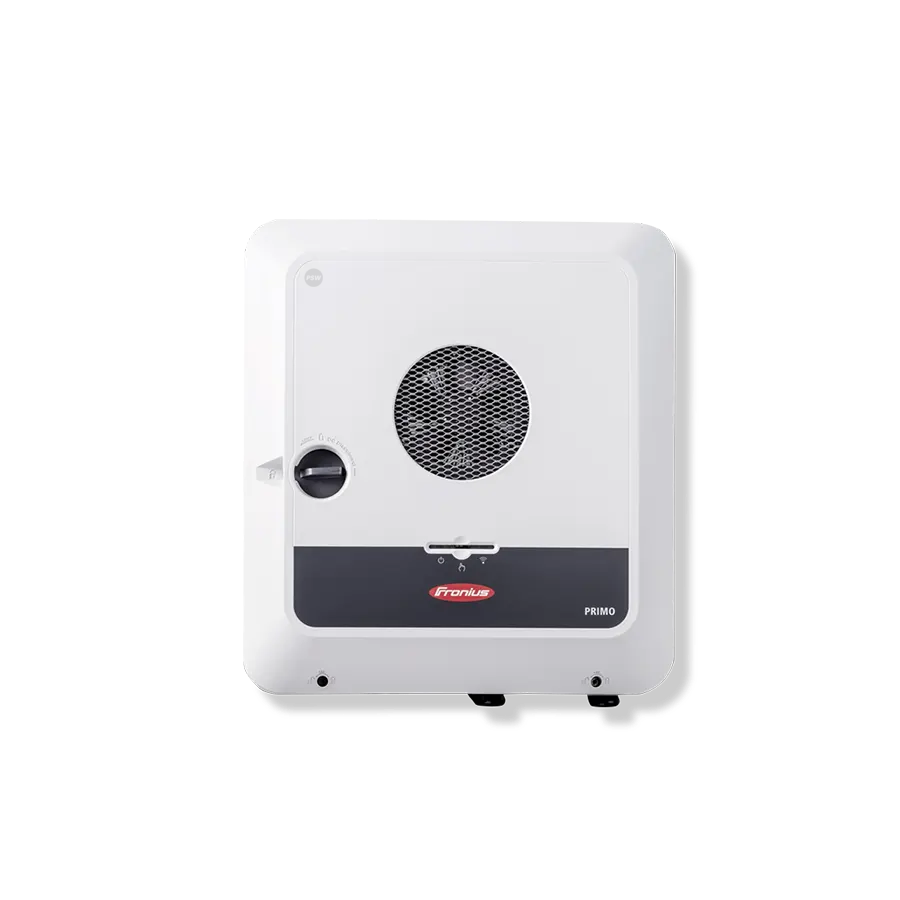
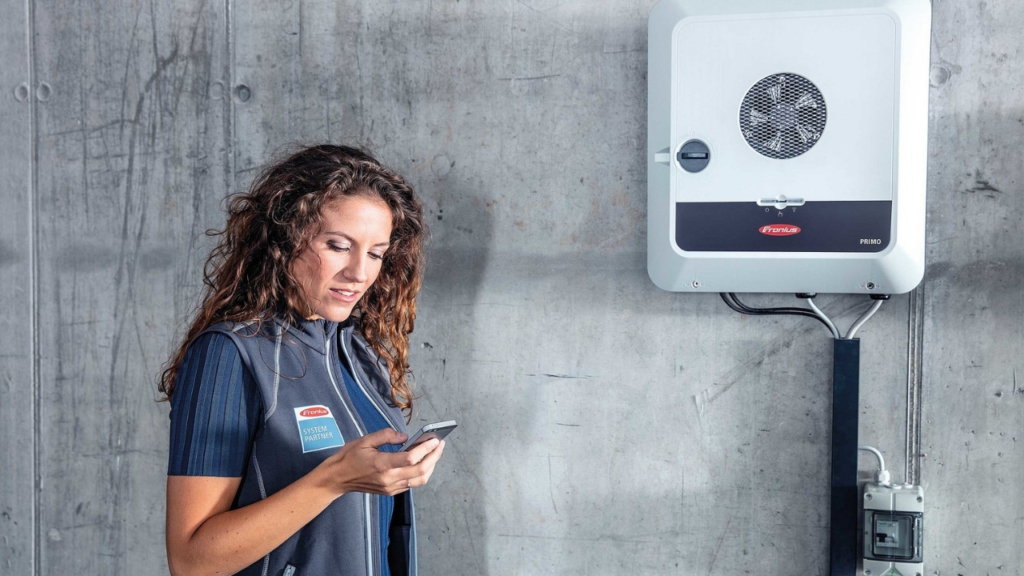
C) The Controller: GEN24+ Hybrid Inverter (Primo/Symo). In the context of an energy ecosystem, the inverter’s primary function is to convert direct current (DC) solar energy into alternating current (AC) for household use and to manage energy flows and device logic. Two key features are particularly important for ecosystem functionality:
- Hybrid Readiness: This refers to the ability to integrate a battery storage system.
- Backup Power Options: This includes PV Point and full backup capabilities, also known as blackout protection.
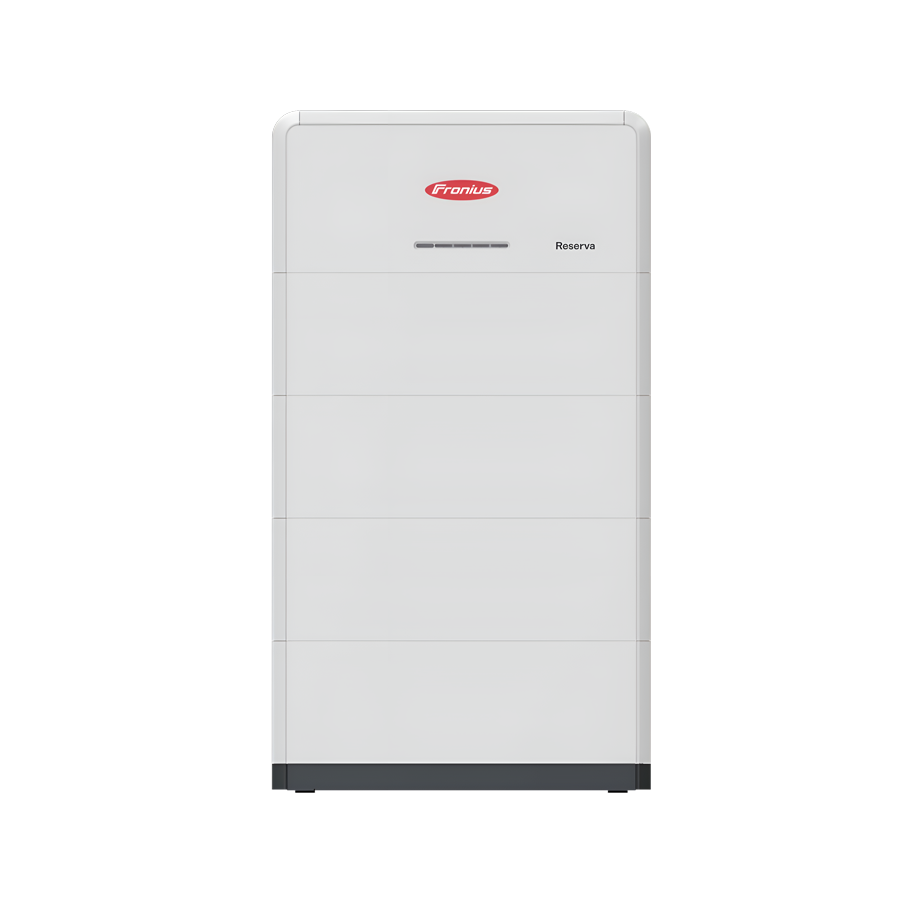
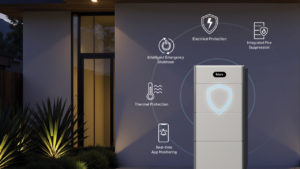
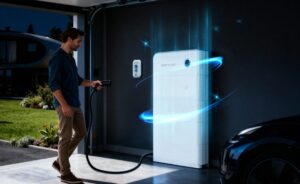
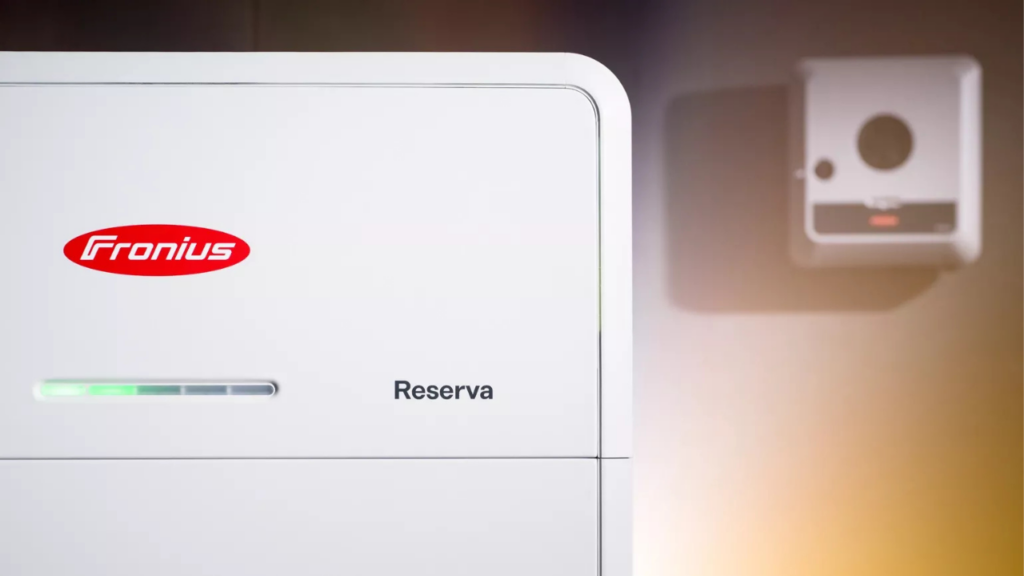
D) Fronius Reserva battery. The Reserva is designed by Fronius as an energy storage system perfectly matched to its hybrid inverters, enabling seamless integration into a photovoltaic (PV) system.
Fronius offers a usable capacity range from 6.3 to 15.8 kWh per tower, utilising two to five battery modules. Additionally, the company assures that system data is stored on servers located in Europe, which addresses privacy and security concerns for some homeowners.
For homeowners, this means there is now an in-house battery option from Fronius designed to work harmoniously within the same platform and service framework.
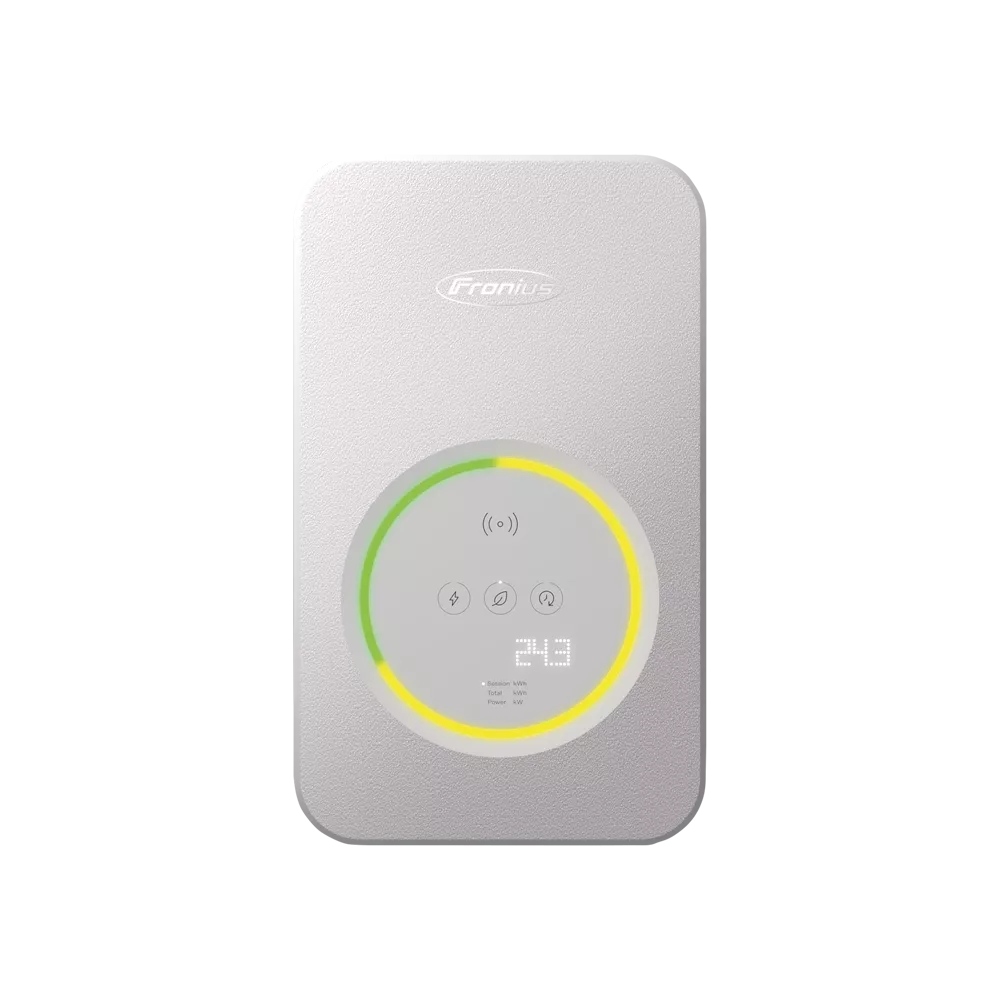
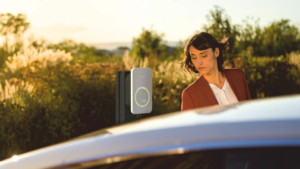
E) Wattpilot Flex (EV charging as an ecosystem load). Fronius positions Wattpilot Flex as an EV charging solution that optimally uses PV surplus energy to charge the vehicle.
What it means for a homeowner: if you have (or will have) an EV, the system can treat charging as a controllable load that soaks up solar surplus instead of exporting it.
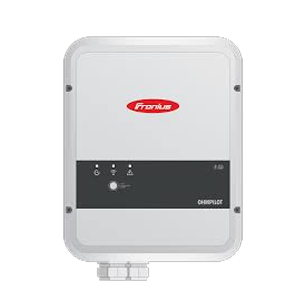
F) Ohmpilot (hot water as an ecosystem load). Fronius describes Ohmpilot as a consumption regulator that uses surplus PV energy to heat water, with continuously adjustable regulation from 0 to 9 kW.
What it means for a homeowner: your hot water system becomes a “thermal battery”, using solar surplus in a controlled way.
3 Scenarios: How Fronius's energy system works
Scenario 1:
“Solar first” household wants better bills without a battery (yet)
Build: GEN24+ + Smart Meter + Solar.web
What happens: Solar.web shows when you’re exporting at low value; Smart Meter data helps you shift dishwasher/laundry/pool pump into solar hours. You’re using the ecosystem to change behaviour first, before buying storage.
Scenario 2:
EV household that wants solar to cover driving
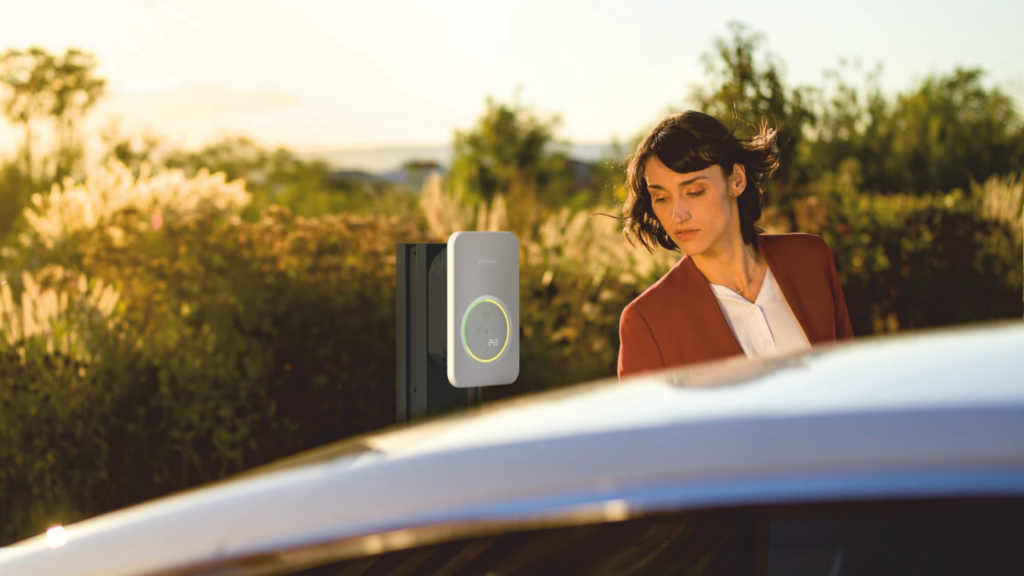
Build: GEN24+ + Smart Meter + Wattpilot + Solar.web
What happens: Wattpilot uses PV surplus charging logic to turn exported solar into kilometres driven. It’s one of the most direct “ecosystem wins” in WA because it converts low-value daytime export into high-value self-use.
Scenario 3:
“Evening-heavy” household (cooking, air-con, family routines).
Build: GEN24+ + Smart Meter + Reserva + Solar.web (and optionally Ohmpilot).
What happens: midday surplus is stored (Reserva) and used in the evening, reducing grid draw when households typically spend the most. In WA, that’s particularly relevant because the DEBS peak window (3–9pm) is exactly when many homes use the most electricity.
2026 installed package pricing (ecosystem entry point)
The pricing below is the “ecosystem foundation” cost in WA terms, including the inverter, power sensor (Smart Meter), base installation (as supplied by PSW), solar array, and Reserva battery, as of Feb 2026.
Single-phase ecosystem foundation (Primo GEN24+ package; power sensor + base install included)
- 5 kW output (2 MPPT): $4,290+
- 8 kW output (2 MPPT): $5,290+
- 10 kW output (2 MPPT): $5,890+
Warranty: 10-year manufacturer product warranty (as supplied)
Three-phase ecosystem foundation (Symo GEN24+ package; power sensor + base install included)
- 5 kW output (2 MPPT): $4,890+
- 8 kW output (2 MPPT): $5,790+
- 10 kW output (2 MPPT): $6,190+
Warranty: 10-year manufacturer product warranty (as supplied)
Important context: “base installation included” is the right starting point, but some homes will still require switchboard upgrades, longer cable runs, communications fixes (Wi-Fi/Ethernet), or compliance-related works depending on site and network requirements. WA also has export limiting and emergency management requirements that can influence configuration. For additional costs associated with Fronius x PSW solar and battery solutions, view here ›
+ your prefered solar or battery. Solar add-ons: 3, 6, 10, 13 kW. Battery add-ons: Fronius Reserva or BYD HVM premium
Backup power: what Fronius can and can’t do
Fronius backup is part of the ecosystem story, but it’s often misunderstood.
PV Point (basic backup power)
On the Fronius Primo GEN24 5.0 Plus technical page, PV Point maximum continuous output power is listed as 3000 VA, with a maximum switchover time of 15 seconds.
That’s “keep essentials alive” territory (fridge, lights, modem), not whole-house living as normal.
Full Backup (broader backup)
The same Fronius technical page lists the maximum switchover time for Full Backup as 10 seconds, but Full Backup is a designed outcome that typically requires additional external components, depending on the system design and model.
Key takeaway: if blackout capability is a priority, the ecosystem plan needs to specify what loads you want backed up and the required hardware pathway, rather than assuming “battery = whole house backup”.
Warranty and what to verify at install
Fronius highlights 10-year warranty models that depend on criteria and registration; Fronius’s warranty information also references registration via Solar.web to obtain the free extension (where eligible).
For homeowners, verification is:
- Confirm the system will be registered/commissioned correctly (Solar.web account and product registration).
- Confirm what is covered in the warranty model being offered (materials vs full warranty plus, where applicable).
- Confirm who the service contact pathway is (your installer and Fronius support) and that monitoring/service messages are enabled in Solar.web.
A homeowner decision guide (ecosystem-first)
Instead of “Which inverter?”, the better question for 2026 is: “Which ecosystem pathway am I building toward?”
1.
Choose a monitoring-and-control ecosystem (no battery yet) if:
You want visibility and bill reduction through better self-consumption behaviour first.
You’re not ready to commit to storage, but you want the system designed so storage can be added later.
2.
Choose an EV-first ecosystem if:
An EV is already in the driveway (or planned soon), and you want solar to cover commuting.
You want PV surplus charging under one Fronius umbrella.
3.
Choose a storage-first ecosystem if:
Evening usage is high and you want stored solar to cover night-time loads.
You want a Fronius battery designed to integrate with Fronius hybrid inverters and Solar.web.
4.
Choose a resilience (backup) ecosystem if:
You have a specific backup goal (essentials vs broad coverage) and will design PV Point/Full Backup accordingly.
A Fronius energy system in 2026 is most compelling when considered as an ecosystem. This includes components such as measurement through the Smart Meter and visibility via Solar.web, controllable loads like EV charging and hot water systems, and now Fronius-branded storage solutions like Reserva.
In Western Australia, where export controls and low daytime buyback rates influence the economics, this ecosystem approach focuses less on “premium hardware” and more on maximising the value of every kilowatt-hour (kWh) generated at home.
If you require assistance in a custom quote for your Fronius energy system, Perth Solar Warehouse is a certified Fronius Solutions Partner servicing greater Perth, Western Australia.