If your solar system was installed five, ten, or even fifteen years ago and you’re using more power than it covers, the obvious thought is: just add more solar panels. It’s the same logic as adding a second water tank when the first one keeps running dry.
The honest answer in 2026 is that bolting extra panels onto an older system is usually the worst of the three options available to you. That wasn’t always true. The market has shifted, the rebates have shifted, and the rules covering what you can install for compliance have shifted again.
This guide walks through what’s actually changed, why most Perth installers will steer you away from a panel-only top-up, and how to work out which of the three real options gives you the best return.
TL;DR
- Three options, not one. When your old system can't keep up you can add panels, keep the panels and add a battery, or replace the whole system. Adding panels is usually the weakest of the three in 2026.
- A battery retrofit is the strongest play for most homes. If your five-to-ten-year-old system still runs well, the bottleneck is usually evening storage, not daytime generation, and a battery fixes that without touching the panels.
- Bolting on extra panels is harder than it sounds. Panel sizes and inverters have moved on since 2015, the STC discount only applies to the new kW you add, and a reputable installer has to certify the whole system to current standards.
- Full replacement is an end-of-life call. It makes sense mainly when the inverter is out of warranty or faulting. From 1 May 2026 the SWIS rules allow up to 30kVA of total inverter capacity, which widens what a new system can be.
Contents
Before getting into specifics, it helps to name what you’re choosing between. When a Perth household outgrows its existing solar, there are three viable paths:
1. Add more panels to the existing system (a like-for-like extension)
2. Keep the existing panels and add a battery (a DC-coupled or AC-coupled retrofit)
3. Replace the whole system with a new, larger array, modern inverter, and optional battery
Each one has a different cost, a different rebate position, and a different ten-year outcome. The order above is roughly the order most homeowners think about them. It’s also roughly the reverse of the order that actually makes sense for most properties today.
Adding solar panels used to be easier
In 2015 than in 2026
When the original version of this article was written, panel-on-panel extensions were already getting harder. They’ve since become harder still, for four reasons.
Panel sizes have changed. A panel from 2015 might be a 60-cell 250 W unit measuring roughly 1640 × 990 mm. A current Jinko or Trina panel is a 144-half-cell 480–500 W unit closer to 1762 × 1134 mm. They don’t share electrical characteristics. You can’t put them in the same string.
Inverters have a fixed MPPT window. Older string inverters (SMA, Sungrow, Goodwe units from the late 2010s) were designed around the voltage and current of the panels available at the time. Adding a different generation of panel on a separate MPPT input is sometimes possible. Mixing them on the same string almost never is.
The federal rebate doesn’t favour extensions. Small-scale Technology Certificates (STCs) are calculated on the new kW added, not the total system size. A 2 kW extension generates roughly a third of the rebate of a fresh 6.6 kW install, which means the per-kilowatt cost of bolt-on panels is noticeably higher than a brand-new system.
SAA accreditation rules have tightened. Solar Accreditation Australia (which replaced CEC accreditation on 29 May 2024) requires the installer to certify the whole system after the extension. If the original install has documentation gaps, unsafe DC isolators, or doesn’t meet current AS/NZS 5033, the installer either has to fix those issues or walk away from the job.
That last point is the one most homeowners don’t see coming. A reputable installer can’t just add four panels and leave. They’re certifying the whole thing.
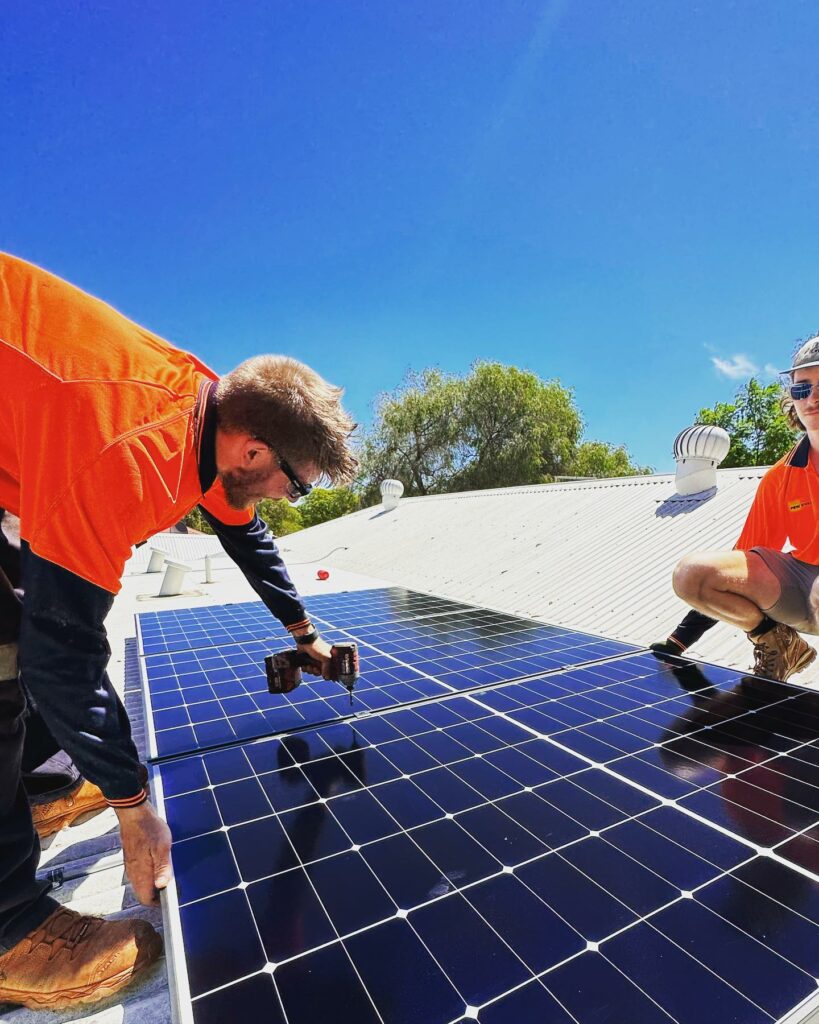
Image: PSW technicians adding solar panels for increased solar generation capacity
Option 1: when adding panels works
There is a narrow set of cases where adding panels still makes sense:
The original inverter is less than five years old and has a spare MPPT input
The original install was documented to current standards (proper labelling, compliant isolators, clean wiring records)
The roof has genuine space for an additional matched string (not just one or two panels squeezed in)
You’re not yet planning to add a battery
When those four conditions line up, an extension is the cheapest path forward. Typical Perth pricing ranges from $1,500 to $3,500, depending on string count and roof access. The new panels qualify for STCs based on their own kW rating, and the existing system continues to generate exactly as it did.
When even one of those conditions is missing, the maths usually tips toward Option 2 or Option 3.
Option 2: keep the panels
Add a battery
This is the option most Perth homeowners haven’t fully considered, and it’s often the strongest one.
Your existing solar array probably still works fine. Panels degrade slowly, roughly 0.5% per year on quality brands, so a ten-year-old 5 kW system is still producing around 4.75 kW. The bottleneck isn’t generation. It’s that you’re exporting cheap daytime power to Synergy at the DEBS rate and buying it back at the evening tariff. A battery solves that without touching the panels. There are two ways to retrofit a battery onto an existing solar system:
AC-coupled retrofit. The battery sits alongside your existing inverter with its own battery inverter. Simplest to retrofit. Works with almost any existing solar setup. Slightly less efficient because solar energy gets converted from DC to AC, then back to DC for storage, then back to AC for the house.
DC-coupled retrofit. A new hybrid inverter replaces (or works alongside) the existing inverter and connects directly to the battery at the DC level. More efficient. Requires more design work. From $1,000 in additional integration cost over a standalone battery install.
The WA Residential Battery Scheme (Synergy customers) and the federal Cheaper Home Batteries Program are both currently live, making 2026 the strongest year so far for battery retrofits in Perth. Stacked correctly, the two rebates typically cover a meaningful share of the install cost.
For a household with a working solar array and rising evening bills, this is almost always the higher-return option compared to adding more panels.
Option 3: replace the whole system
The case for full replacement gets stronger in three situations:
The existing inverter is out of warranty and showing faults (the most common trigger)
The original system is smaller than 5kW and the roof can support 10kW or more
You want to install a battery and the existing inverter isn’t hybrid-capable
From 1 May 2026, the SWIS connection rules allow up to 30kVA of aggregate inverter capacity per household (combining solar and battery inverters). That’s a substantial increase on the previous 10kVA single-phase / 15kVA three-phase limits, and it changes what a “full system” looks like for many Perth properties.
The trade-off is that replacement is the most expensive of the three options up front. The federal STC rebate applies to the new array at its full kW rating, but the original panels (and often the original inverter) are recycled. A 6.6kW system from 2015 doesn’t have a meaningful resale value.
A full replacement makes the most sense when the existing system is already at or near the end of its life. It rarely makes sense when the existing system has another five-plus good years in it.
The May 2026 SWIS rules change
The new SWIS (South West Interconnected System) rules don’t directly affect whether you can add panels. They do change the wider design picture in three ways:
1. 30kVA aggregate cap. Solar and battery inverters now share a single 30kVA ceiling. If you’re planning an extension and a future battery, the combined inverter capacity matters.
2. Two export pathways. Standard export limited to 1.5kW, or “future-ready” export (requiring CSIP-AUS communications and Emergency Solar Management capability), which preserves access to flexible exports, DEBS, and Virtual Power Plant products. Most quality installs in 2026 take the future-ready pathway.
3. AS/NZS 4777.2:2020 compliance. Any inverter installed or replaced after 1 May 2026 must comply with the current version of the standard. Older inverters that aren’t being touched are unaffected.
Systems installed before 1 May 2026 continue to operate under their existing arrangements. A pre-May 2026 system can still be extended later, but the extension itself must meet the new rules.
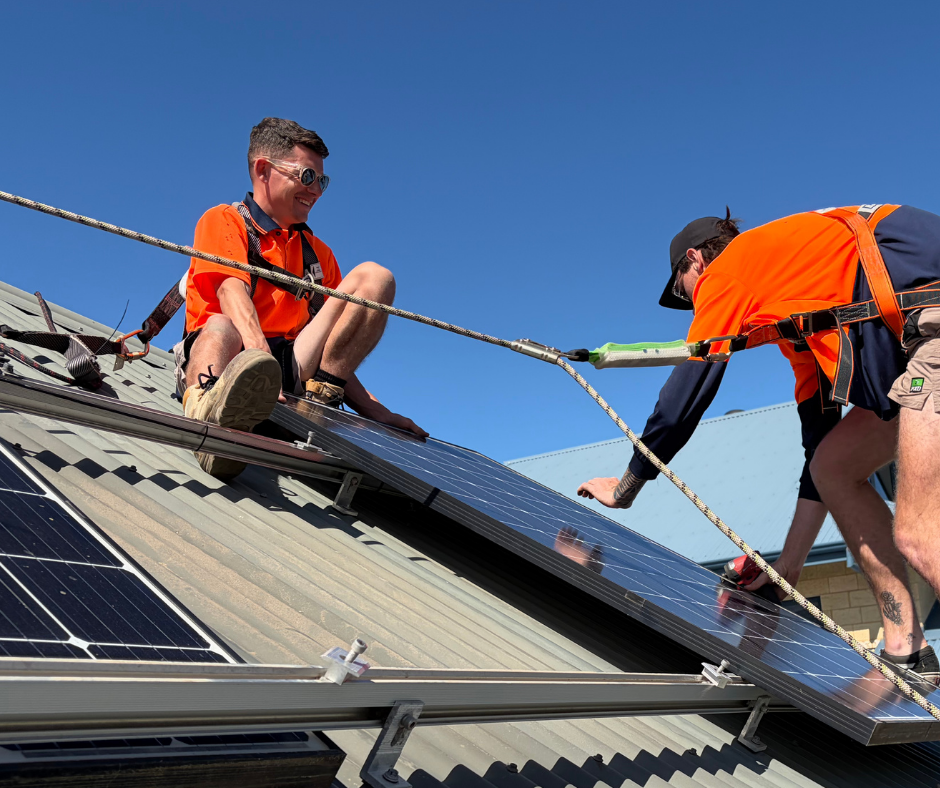
Image: PSW technicians removing existing solar panels for new/increased solar generation capacity
Which option suits your scenario?
Check the age and warranty of the existing inverter. If it’s out of warranty or showing faults, Option 3 is usually the answer. If it’s healthy and has spare MPPT capacity, Option 1 is on the table.
Check the evening side of your power bill. If your DEBS credit is healthy but your evening usage is still costing $100+ per quarter, the bottleneck is storage, not generation, so Option 2 is the higher-return move.
Check what the roof can actually hold. Some Perth properties (especially older Bibra Lake, Fremantle, and inner-city homes) simply don’t have room for a much larger array. In those cases, the design conversation moves to battery sizing and self-consumption rather than panel count.
Many installers won't touch
your existing system
It’s worth noting that there are Perth solar companies that will quote you a full system replacement because they don’t want the certification responsibility of working on an older install. That’s a business decision, not a technical conclusion. A reputable installer should be willing to assess your existing system, tell you which option actually fits your house, and explain the reasoning either way.
If you’ve been quoted a full system replacement without a proper conversation about Options 1 and 2 first, get a second opinion.